
Puffy Shapes Feel More Approachable Than Hard Edges
Picture a craft-market table covered in stickers. Fingers hover over the sharp little stars. They land on the puffy clouds.
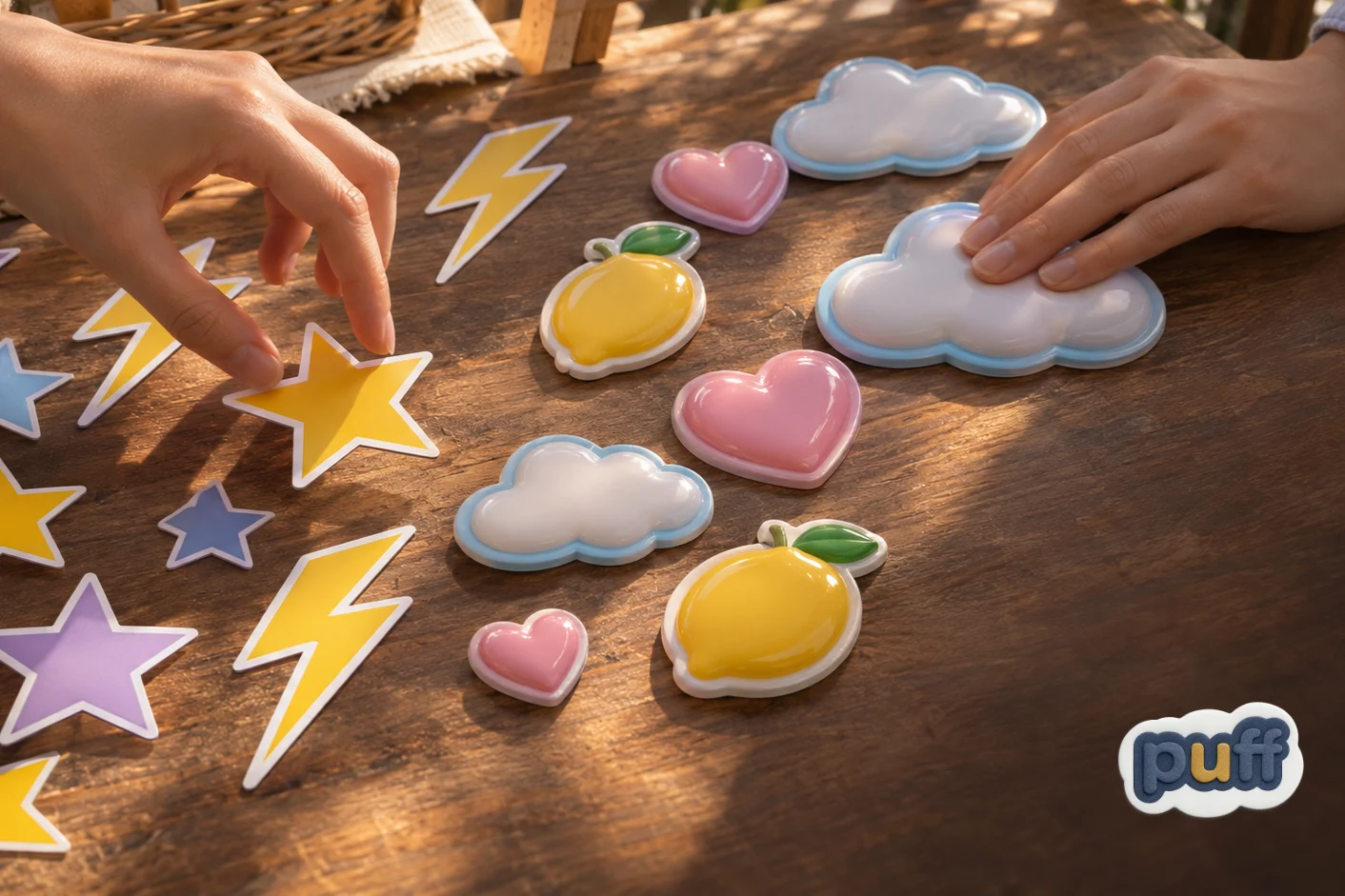
Picture a table at a weekend craft market, covered in stickers. Some are crisp little stars with points sharp enough to catch on a sleeve. Others are puffy clouds, round hearts, a fat cartoon lemon with a soft foam middle. People drift past, and their hands say more than their words do. Fingers hover over the stars. They land on the clouds.
Nobody stops to explain why. Ask them, and most people would say the puffy shapes look cute, or friendly, or fun. Those answers are true, but they sit on top of something much older. Long before we had a word for cute, we had a body that needed to know which things in the world could hurt it. A curve has always been an easier thing to touch than a point.
A puffy sticker carries that curve in two directions at once. Its outline bends, and so does its edge, where the foam slopes down to meet the surface instead of stopping at a cliff. That double softness, round from above and round from the side, is the reason puffy shapes feel like they are on your side before you have even picked one up.
What a Corner Says First
Run your thumb along the edge of a new bank card, then along the rim of a river stone. The card is not dangerous. Still, your thumb slows down at its corner, the way your foot slows at the top of a staircase in the dark. The stone asks for nothing. Your thumb just keeps going.
That small slowdown is the whole story in miniature. A corner is a place where a surface changes its mind, and the body notices every change of mind. A curve never makes that sudden turn. It hands you from one side of the object to the other without a warning in between.
Language seems to know this too. In a famous little test, people see two shapes, one a spiky splash and one a soft, lumpy blob, and are asked which one is called "kiki" and which one is called "bouba." Across many languages and age groups, people give the same answer. The spiky one is kiki. The round one is bouba. Researchers call this the bouba/kiki effect, and it shows that we hear shapes before we ever touch them. A point sounds sharp and quick. A curve sounds slow, warm, and a little bit silly, in the best way.
So a shape is never just a shape. It comes with a voice, a temperature, and a guess about how it will treat you.
The Brain's Small Hesitation
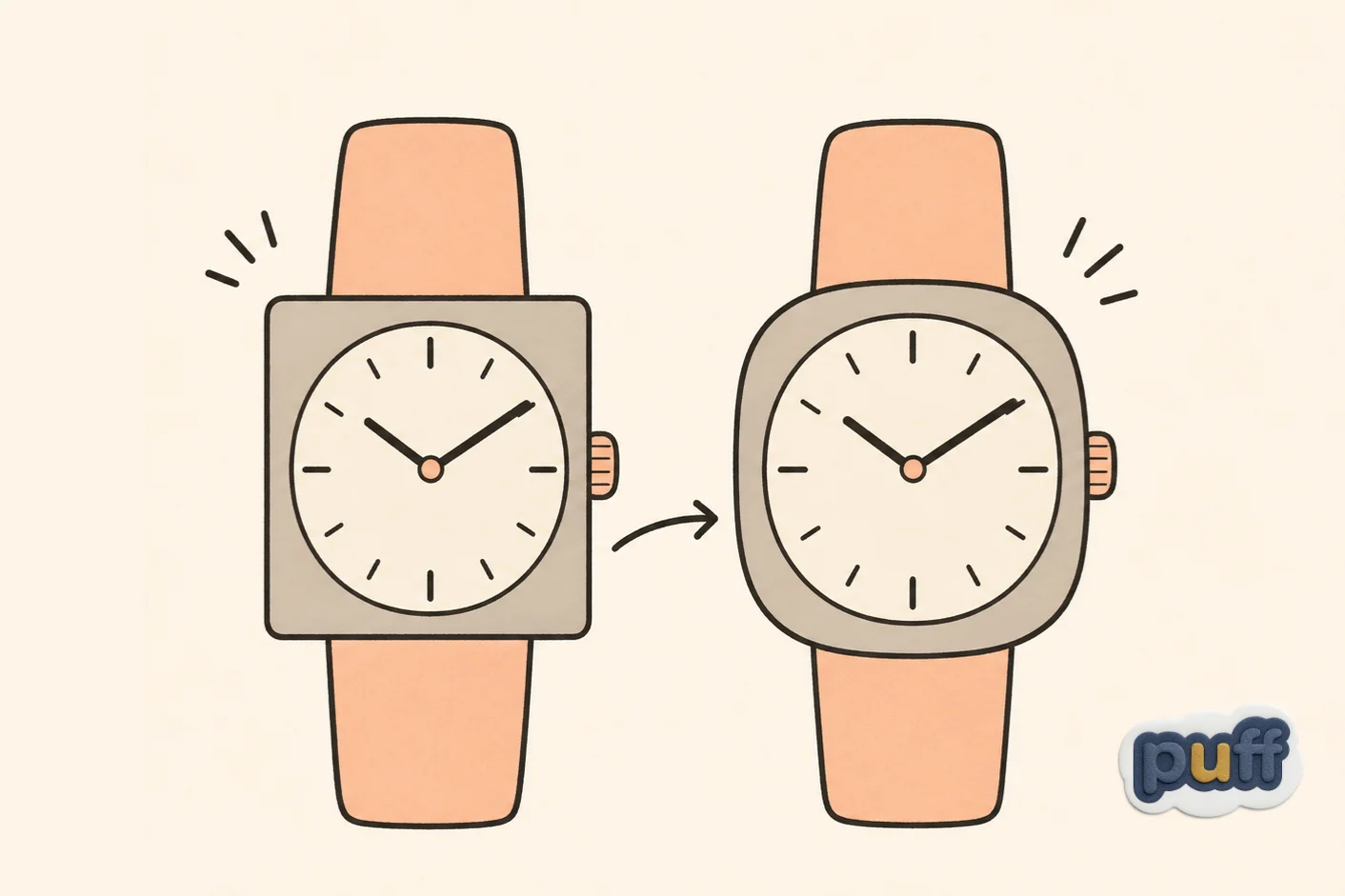
The neuroscientist Moshe Bar and his colleague Maital Neta once showed people pictures of ordinary objects in pairs. A watch, a sofa, a kettle. Each pair was the same object with one change: one version had sharp angles, the other had curves. Over and over, people liked the curved versions more. They could not always say why. They just did.
When the team looked at brain activity, the sharp-angled objects drew a stronger response from the amygdala, a small region that helps the brain flag anything that might be a threat. Nobody in the study felt afraid of a pointy kettle. The response was tiny, a flicker rather than an alarm. But it was there, and it happened before anyone had time to think.
That flicker is easy to overlook, and it matters more than it seems. A corner asks for a small amount of care. A curve asks for none. When something asks for nothing, we relax around it, and relaxing is the first step toward liking. Approachable, in the plainest sense, means "safe to come closer." Rounded shapes give that permission without saying a word.
Why Puffy Shapes Are Rounded Twice
Most sticker shapes can be round. A flat die-cut circle has a lovely round outline. Look at it from the side, though, and its edge is still a cut line, a thin wall you can catch with a fingernail. The eye says friendly. The hand finds a ledge.
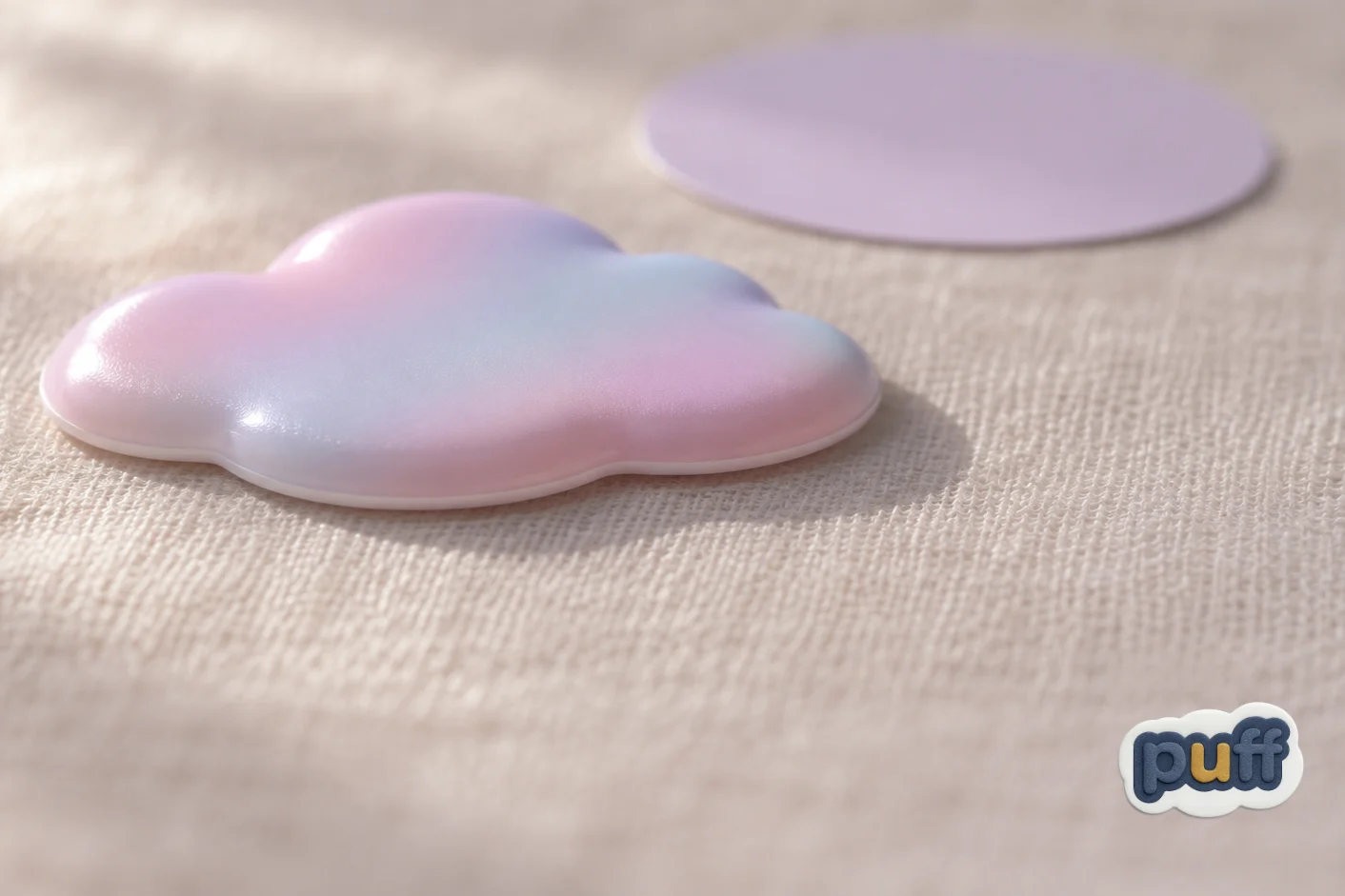
A puffy sticker closes that gap. The foam domes up from the center and rolls down toward the edge, so there is no wall at all, only a gentle slope. It is round in outline and round in profile. Think of it as a ramp instead of a step. The outline tells the eye it is safe to look. The profile tells the hand it is safe to touch. Two permissions, given at once, and they agree with each other.
This is part of why a raised sticker starts to feel like a small object rather than a picture. Objects have sides. A sticker with a soft side, one that curves away instead of ending, feels like something you could hold in a cupped palm, like a pebble or a gumdrop.
Here is the part most people miss. The slope changes shapes that are not round at all. A puffy star still has five points. The foam softens each tip as it rises, so the points round off in the third dimension even while the outline stays sharp. The star keeps its look of energy, and it loses its bite. You get the spark of a point with the kindness of a curve.
The Long Love Affair With Round Things
Look around any room and you will find the same choice being made again and again. The corners of phone screens and app icons are rounded. Children's furniture has edges like bars of soap. Bubble letters, inflated type, chubby cartoon animals, rounded sofas you sink into. Every few years design seems to rediscover the round, as if it had been lost, and then everyone wonders why it feels so good.

Part of the pull comes from faces. The animal scientist Konrad Lorenz noticed that babies, puppies, and kittens share a set of features: round heads, full cheeks, soft outlines. We respond to that roundness with a rush of warmth and a wish to protect. Designers borrow it all the time. A round shape does not need eyes to borrow a little of that feeling. Its outline does the work.
Puffy shapes sit right at the center of this. They are round, they are plump, and they look like they would give a little if you pressed them. That is why a cloud sticker can make a plain water bottle feel more like yours, and why custom puffy stickers so often end up on the things people hold every day. A hard edge keeps its distance. A puffy shape moves in.
When Hard Edges Are the Right Answer
Picture a surgeon's scalpel with a puffy, rounded handle shaped like a cloud. Something in you pulls back, and not because it looks unsafe. It looks unserious. That reaction is a useful reminder that round does not always win. Approachable is a tone, not a virtue, and some things should not feel like they are offering you a hug.
A precision tool, a law office, a serious watch, a whiskey label. These brands want you to feel that someone measured twice. A sharp corner says exact. It says the line will be where it should be. Hand those brands a sheet of rounded clouds and the message wobbles. People may like the sticker and trust the brand a little less, because the shape and the promise no longer match.
The honest question is not "round or sharp?" It is "how close do you want people to come?" A bakery, a kids' bookshop, a skincare line, a café with handwritten menus, a wellness brand: these want people to lean in, linger, and pick things up. Rounded shapes help them do that. A brand that wants respect before warmth can keep its edges and still use dimension in other ways.
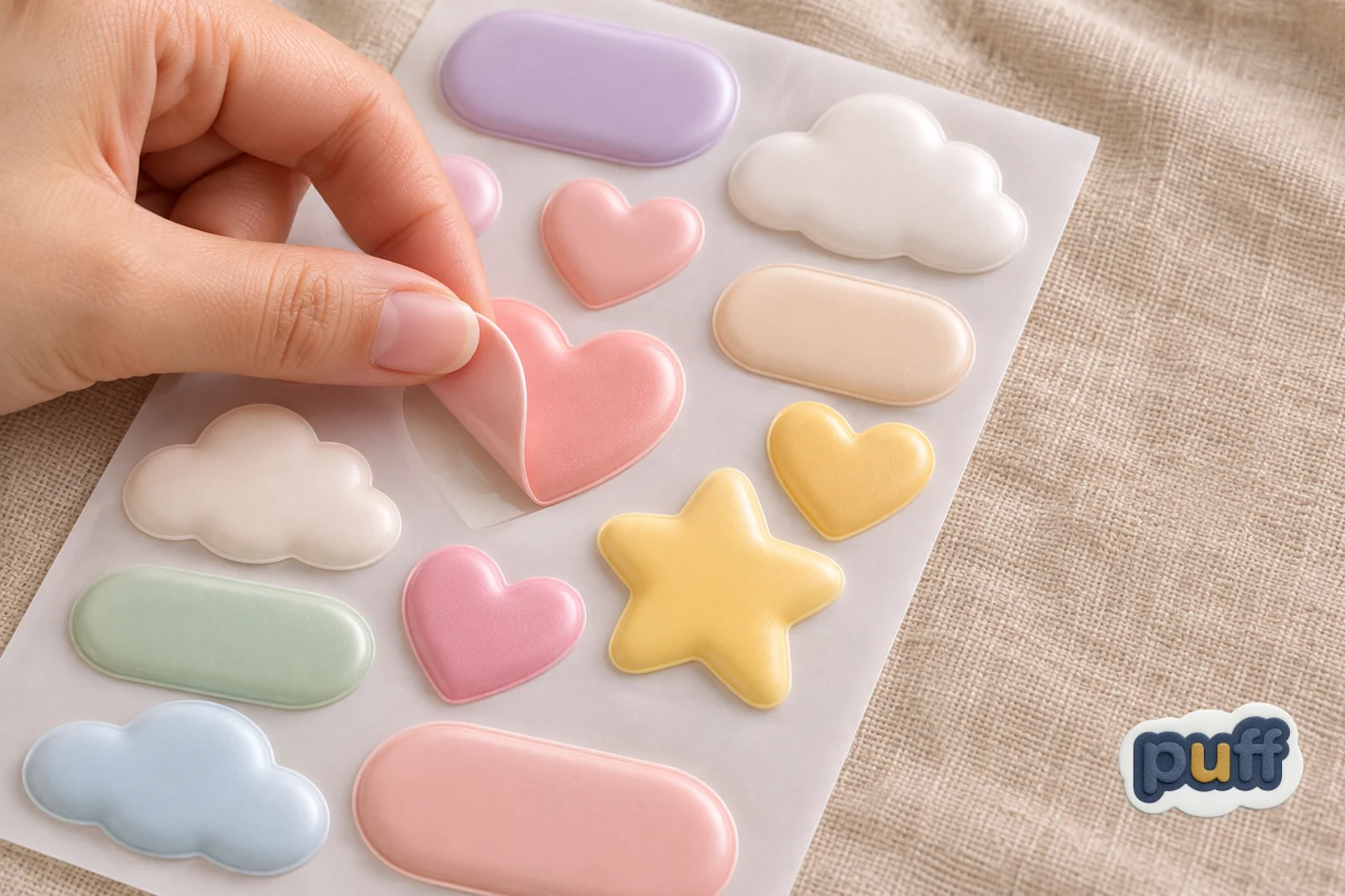
There is a middle path too, and it is often the smartest one. Many logos are angular because the brand wants energy, not distance. A puffy version keeps that outline but softens how it feels. The corners stay crisp from across the room and turn gentle up close. For a small business that wants to look sharp and feel friendly at the same time, a sheet of custom puffy stickers can carry both moods without forcing a choice between them.
A useful test before you choose a shape: hold the design up and imagine someone reaching for it with their eyes closed. If you would want their fingers to slow down, keep the edge. If you would want them to keep going, let it curve. Most brands, when they are honest about it, want a little of both, and the foam lets them have it. The outline can stay as bold as the brand needs, while the surface stays kind enough that people keep it, stick it somewhere they will see it, and reach for it again without thinking.
The Edge Is Where Things Introduce Themselves

We tend to think of a shape as an outline, a line drawn around a picture. But the edge of a thing is also its first sentence. It is the part that meets your hand first, the place where an object tells you how it plans to treat you. A corner says, slow down, mind the point. A curve says, come in.
That is what the market table shows, if you watch long enough. The hands that land on the clouds are not choosing cute over clever. They are answering a very old question about what is safe to touch, and the puffy shape answers it twice, once for the eye and once for the hand.
A puffy star still has five points. None of them can hurt you. Maybe that is the best thing a small object can offer: all of its personality, with none of its sharpness, sitting still on the things we carry, waiting for a thumb to find it.