
The Invisible Layers Inside a "Simple" Pouch
Pick up a bag of coffee beans and run your thumb along the seal. It feels like one sheet. Under a magnifying glass, the cut edge shows stripes.

Pick up a bag of coffee beans and run your thumb along the seal at the top. It feels like one thing. One sheet, folded and closed, the way a paper envelope is one sheet. You can pinch it, crinkle it, tear it open at the little notch, and nothing about the moment suggests more is going on than a skin wrapped around something you want to keep fresh.
Now picture slicing that same bag with a sharp blade and holding the cut edge under a magnifying glass. The edge shows stripes, the pouch layers nobody was meant to see. A thin outer band, a bright metallic line, a soft milky layer on the inside, and threads of glue so fine you would never spot them without help. The "simple" pouch is a stack of materials, each one doing a single job, pressed together so tight they behave like one.
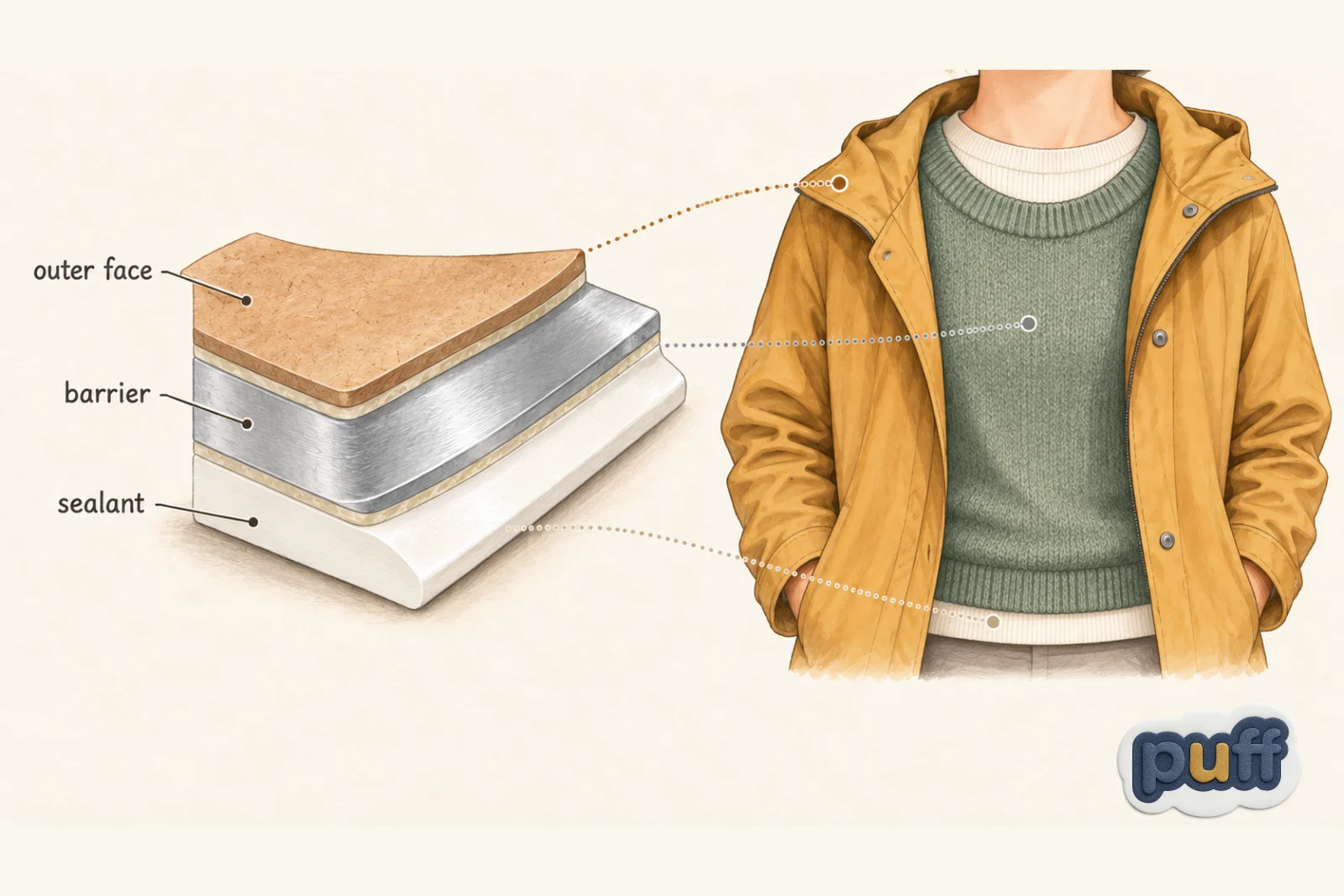
That gap between how a pouch feels and how it comes together is the heart of this piece. And the easiest way into it is something you already understand from cold mornings. A pouch gets dressed in layers, the same way you do before a winter walk.
Dressed for Weather
A good winter outfit follows a logic most of us use without thinking. Something soft goes against the skin. Something warm goes in the middle. Something tough and weatherproof goes on the outside. No single garment could handle all three jobs. A wool sweater keeps you warm but soaks through in rain. A raincoat keeps water out but feels clammy on bare arms. You stack them because each one covers for what the others can't do.
A pouch follows the same logic, almost layer for layer. The inside layer, the one touching your coffee, rice, or dried mango, plays the part of the base layer. It sits right against the food, and it has to melt and fuse to itself when a sealing machine presses it with heat. That neat line across the top of a bag is two inner layers holding hands. Most of the time this layer is a kind of polyethylene, picked because it seals clean and stays soft.
The middle layer is the warm sweater, the one doing the real protecting. In many pouches it's a film carrying a whisper-thin coat of metal, or a sheet of aluminum foil in the toughest cases. Its job is to slow down oxygen, moisture, and light on their way in. It does almost nothing for the look of the bag, and you never touch it.
The outer layer is the raincoat. It takes the scuffs of shipping and shelf life, carries the printed design, and gives your hand its first impression. On a kraft-style bag, this is where the paper lives. On a glossy pouch, it's often a clear polyester film printed on its back side, so the ink sits safe behind it, like a photo behind glass.
Then comes the part no outfit ever shows you: the seams. Between each layer runs a thin adhesive, the glue that lets three or four separate materials act as a single sheet, what the trade calls a laminated film. Without it, the whole stack would peel apart at the first fold.
The Layer You See Does the Least Work
Once you picture a pouch this way, a small irony shows up. The layer you look at and touch, the one that decides whether you like the bag, does the least protecting. The layer working hardest, the barrier in the middle, never gets seen at all. And the layer touching the food, the one that matters most for keeping the seal shut, hides on the inside where only the coffee knows about it.
Call it the quiet-middle rule. In a well-made pouch, attention and effort sit at opposite ends of the stack. The outside earns your eye. The middle does the guarding. The inside keeps the promise.
This runs against how we judge most things. With a table, a coat, or a loaf of bread, the outside tends to tell you something true about the inside. A heavy oak table looks heavy. A thick coat looks warm. We carry that habit into the grocery aisle and treat a pouch's skin as if it were the whole pouch. A matte paper face feels earthy and plain, so we assume the bag is earthy and plain all the way through. It's the same habit behind why the "paper is better" argument leaves so much out: we trust what we can see and forget what we can't.
Here's the twist. The plainest-looking bag in the aisle often carries more layers than the shiny one beside it. Paper on its own lets air and grease slip through, so a kraft face still needs a barrier film and a sealant behind it. A kraft mylar bag with a warm, natural look can feel natural in the hand while a powerful barrier does the hard work underneath, because the paper and the barrier are two separate layers with two separate jobs. Plain on the outside takes effort on the inside.
Why One Material Can't Do It All
Think of a plain sandwich bag from the kitchen drawer. It's a single layer of polyethylene. It seals, it's soft, it costs almost nothing. Leave crackers in one for a week, though, and they go soft, because air and moisture walk right through. The single-layer bag is honest about what it is, and what it is falls short for anything that needs to last.
People have hunted for one perfect film for a long time. The trouble is that the qualities you want tend to pull against each other. Some films block oxygen well but lose that power when they get damp. Films that seal well tend to let gases through. Films that look lovely and hold crisp printing don't always bend without cracking. Food packaging scientists like Kit Yam at Rutgers work on this kind of balancing act, because every food asks for its own mix.
Layering is the gentle workaround. Instead of one material doing everything halfway, you get several, each doing one thing well. The retort pouch, the foil-lined pouch first developed for soldiers' field meals, took this idea about as far as it goes, with layers tough enough to survive cooking inside the sealed bag and keep a meal safe on a shelf for a very long time.
Most pouches on a shop shelf never need anything that extreme. Coffee wants a strong guard against oxygen. Dried herbs worry more about light. A bag of cookies fears moisture most. Changing the middle layer, or its thickness, lets one familiar pouch shape serve very different foods. That metallized middle film is the same material behind the shine of custom mylar bags, and it has a longer and stranger history than most shoppers would ever guess.

What Your Hands Notice Without Knowing
Squeeze a pouch of trail mix and listen. That crinkle is the layers talking. A single-layer bag makes almost no sound. Stack a stiff polyester film on a metal coat on a thick sealant, and the sheet gains a springiness that snaps back with a bright, dry crackle. The familiar sound a mylar bag makes turns out to be one of the few ways a buyer gets to sense what's inside the laminate without cutting it open.
Your hands pick up other clues too. The way a pouch stands on its own base instead of slumping. The small weight of it. Whether a fold holds its crease or springs back. A bag that feels limp and thin in the hand often is thin, with fewer or lighter layers. One that feels sturdy and keeps its shape tends to have more going on inside.
We make these calls in about a second, with no idea we're reading a cross-section. It's a bit like judging a friend's mood from their footsteps in the hall. You can't see their face, but the rhythm tells you plenty.

Choosing Pouch Layers for What Goes Inside
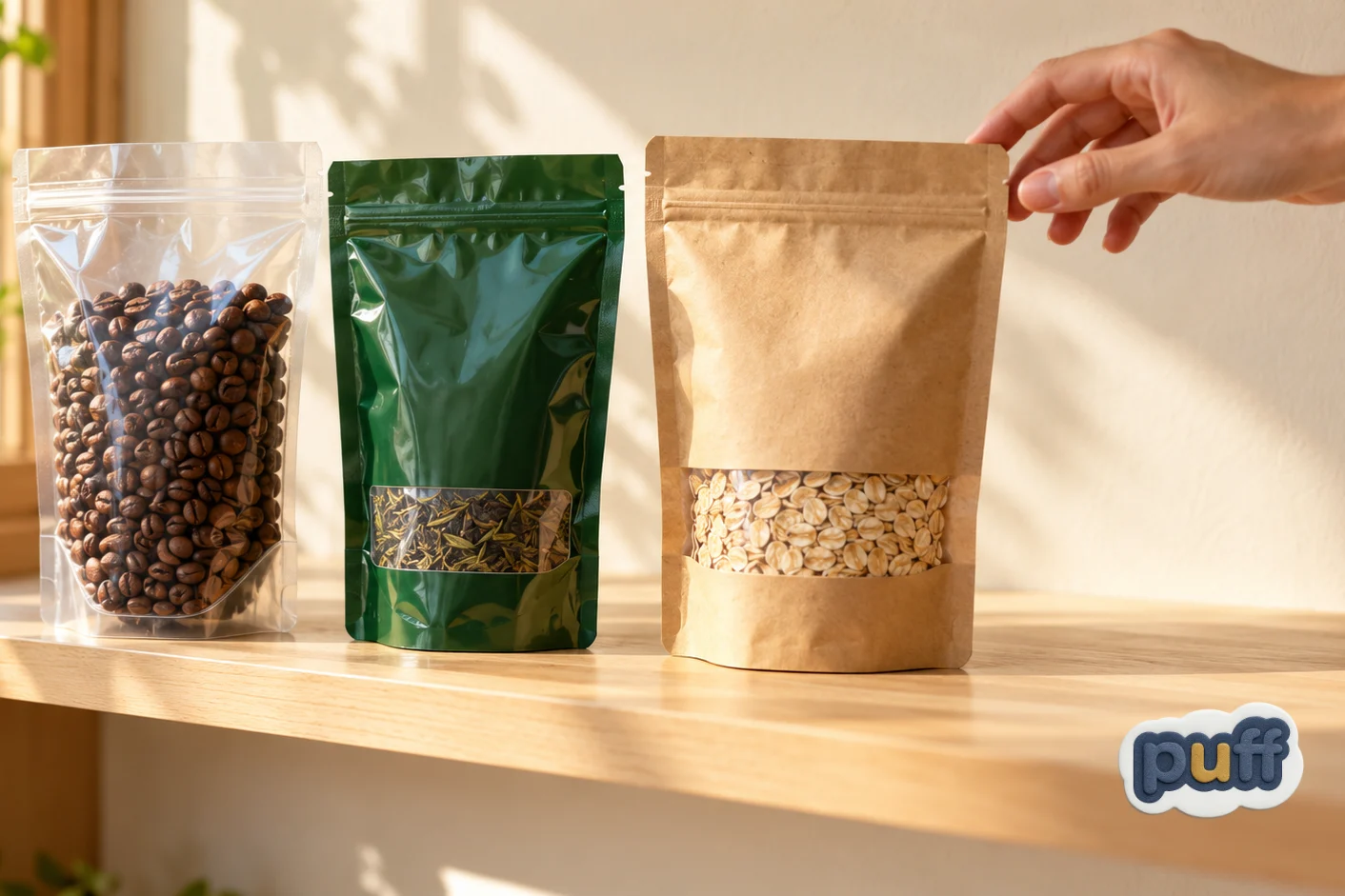
Picture a small coffee roaster lining up three sample bags on a counter. One clear, one glossy black, one kraft brown. They all look like "a bag." Thinking in layers turns that into three easier questions.
First, what does the product fear most? Oxygen, moisture, or light. That answer shapes the middle layer, and it matters far more than the color of the outside. Second, what does the outside need to say? Warm and handmade, sleek and modern, or see-through and honest about the beans. That's the job of the outer layer, and you have real freedom there once the middle is right. Third, what happens after the bag is empty? Pouches made from many different materials are hard to pull apart for recycling, and some newer pouches build every layer from the same plastic family, like mono-PE, so the empty bag can go to store drop-off where available. That trade-off between protection and recycling deserves its own careful look, and it never has a one-word answer.
There's one more layer worth mentioning, the one many brands add last: a sticker or label pressed onto the front. It sits on top of the raincoat, and its whole job is to be noticed. In a stack where the hardest workers stay hidden, it's the one layer that gets to wave.
The Beauty of Things That Hide Their Work
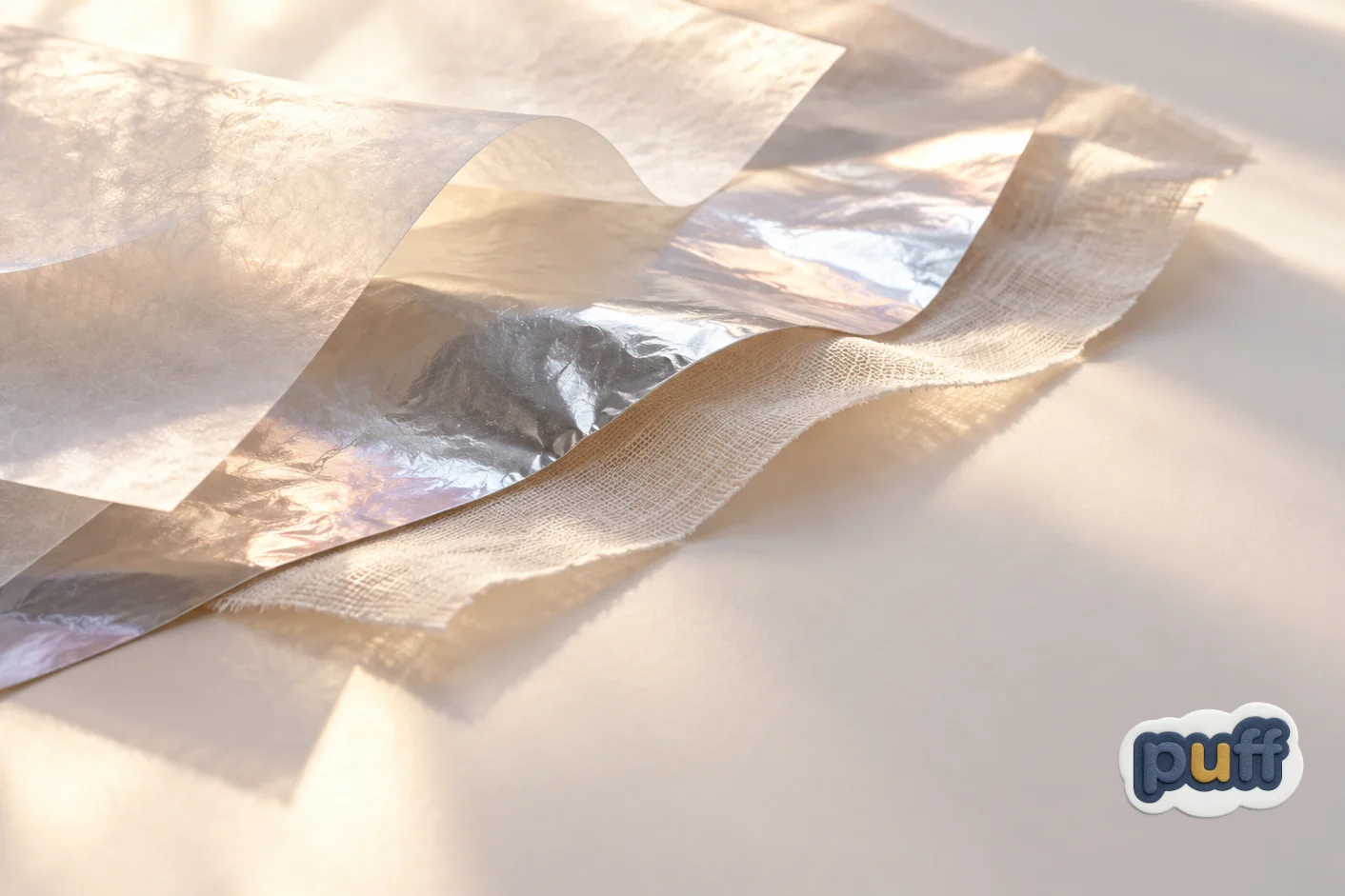
Tear the notch on your next bag of coffee and pause for a second at the edge. That clean rip runs through three or four materials at once, each one made by different machines, each one picked for a different reason, all of them agreeing to act like a single sheet for as long as you need them.
We tend to use "simple" as a word for things with nothing inside them. A pouch suggests a kinder meaning. Sometimes simple is the name we give to care that works so well it disappears. The pouch looks plain for the same reason a good winter coat feels light: someone did the layering, so you never had to think about the cold.