
What the Brain Expects From a Soft Surface
Press your thumb into a loaf of bread and it pushes back, slowly at first, then a little quicker. Nobody taught you to expect that.
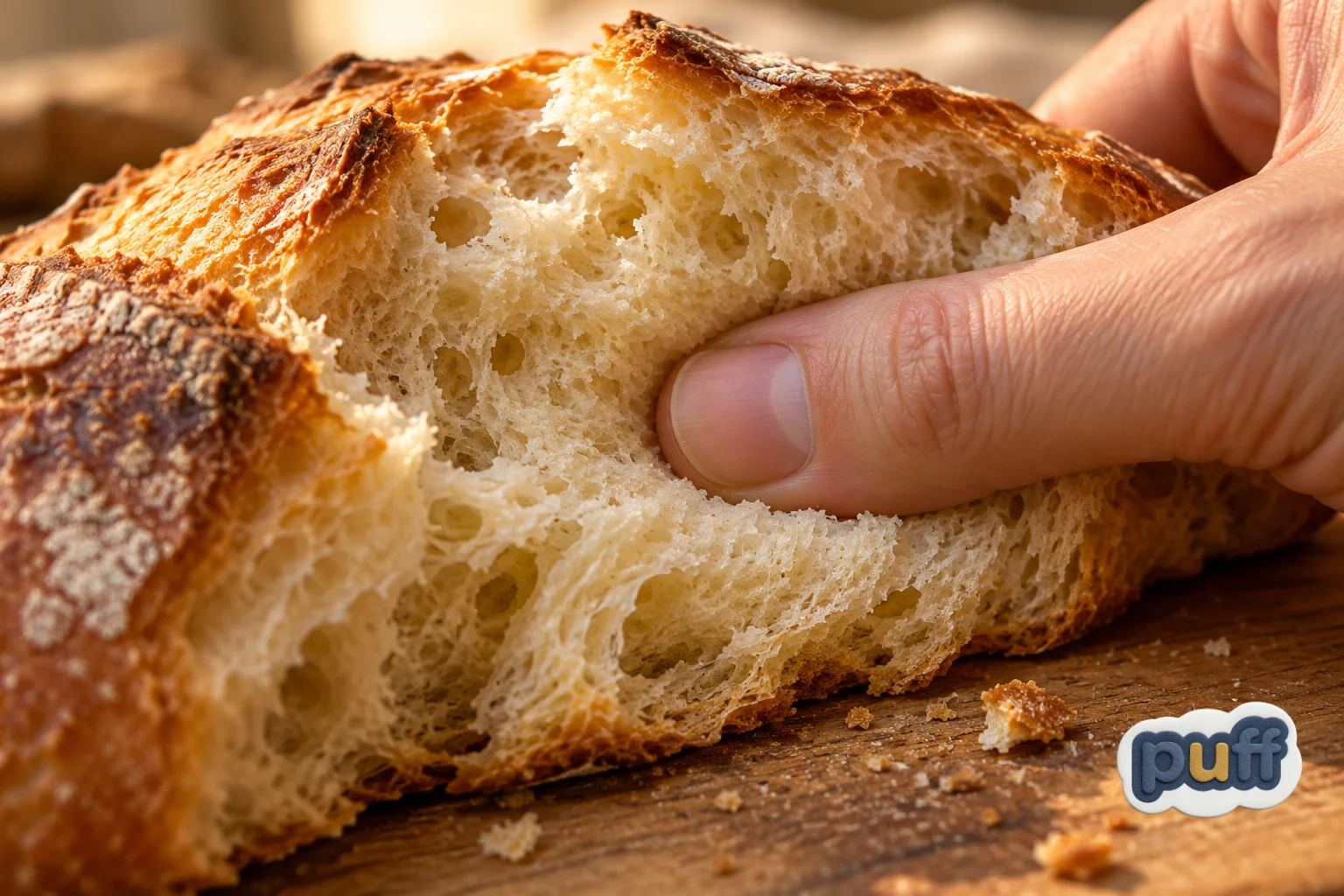
Press your thumb into a loaf of bread that cooled on the counter an hour ago. The crust gives a little, the crumb gives more, and then something happens that you have felt a thousand times without noticing. The bread pushes back. Slow at first, then a little quicker, until the dent is almost gone and only a faint print of your thumb stays behind.
Nobody taught you to expect that. You never sat down and learned that soft things come back, or why squishy things feel good when they do. Your hand knew it before it landed all the same, and if the bread had stayed flat under your thumb like wet clay, you would have felt a small jolt. The kind of jolt that makes you lift your hand and look.
That jolt is where this piece begins. Earlier in this series we looked at how softness gets seen before it gets felt, how the eye reads a rounded edge or a slow highlight and makes a guess. This time we stay with the moment after the guess, the press itself. What the brain waits for when a finger meets something soft has less to do with the material than with time. To the brain, softness is a promise about the next half second.
A Story Told in Three Beats
Watch someone test a pillow in a shop. They press, they pause, they let go, and then they watch the fabric. Almost everyone does the same small ritual, and almost no one could tell you why.
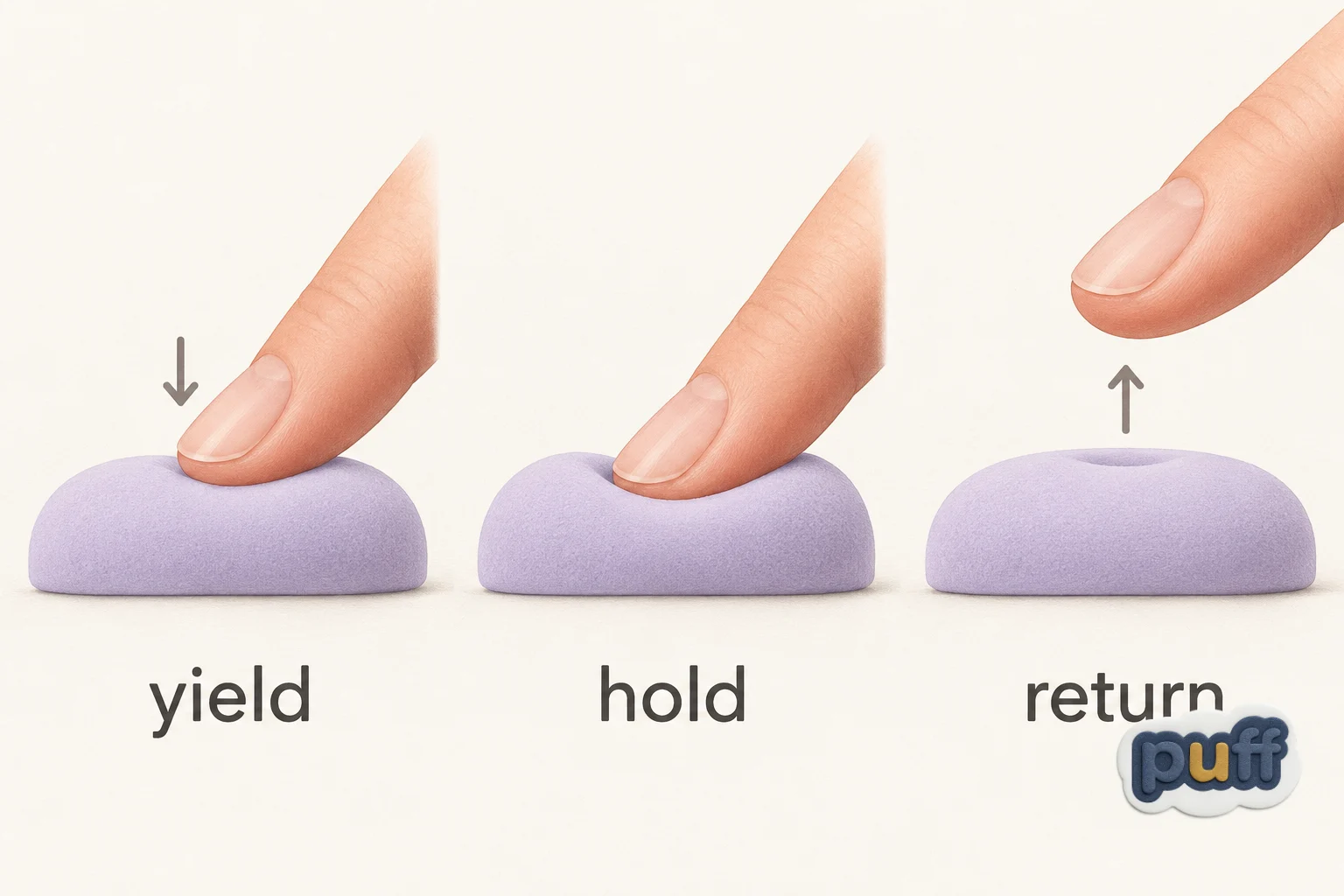
The ritual follows the three beats of every soft touch. First comes the yield, the speed at which the surface gives when your finger arrives. Then the hold, the point where resistance builds and the press settles into place. Last comes the return, the surface rising back once you let go. Each beat has a tempo your hand expects, and each soft thing you have ever known taught you a version of that tempo.
A kitchen sponge yields fast and returns fast, almost eager. Memory foam yields slow and returns slower still, and that slowness feels calm, even a little luxurious. A balloon gives almost nothing before it pushes back hard, which is why nobody calls a balloon soft, even though you can squash one with a finger.
Then there is the ripe peach. It yields with perfect grace. It never returns. The dent stays, and the moment you see it, you feel you have done something wrong. Same softness on the way in, a whole different feeling on the way out.
That is the idea at the heart of this article. Two surfaces can give in the same way and still feel nothing alike, because the return is the signature. The way a surface comes back tells you what kind of soft it is, and whether it can be trusted with another press.
Your Hand Is Already Guessing
Reach for a cup of tea you think is full when someone has already drunk it. Your arm lifts too high, too fast, and a little of your confidence spills with it. The arm was not reacting to the cup. It was following a plan made before the fingers ever closed.
Touch works the same way. Scientists who study predictive coding describe the brain as a constant forecaster, sending out a guess with every movement and then checking the guess against what the senses report back. When the two match, very little happens. The brain stays quiet, and that quiet feels like ease. When they clash, the gap grabs your attention at once.
Fingertips run this check at remarkable speed. Researchers such as Benoni Edin at Umeå University have spent years studying how the skin of the fingers reports to the brain during a grip, and how fast the hand corrects itself when that report brings news. Your hand adjusts within a fraction of a second, long before you could put the change into words.
So when your finger lands on something that looks soft, it does not arrive empty. It arrives carrying a full forecast: this much give, this much hold, a return at about this pace. In an earlier piece we looked at the reflex to touch a raised surface, the pull that makes a hand reach out at all. This is the other half of that story. The reach is the question. The forecast is the answer the hand hopes to hear.
Where the Expectation Comes From
A toddler carries the same worn rabbit from room to room for years. The fur has thinned, one ear is flatter than the other, and the stuffing inside has settled into lumps. To anyone else it is an old toy. To the child, it has the one correct softness in the world.
Our sense of how soft things should behave grows from moments like that. A parent's arm at bedtime. Dough on a floured counter. The sofa cushion that sighs when you sit down after a long day. Each one taught a tempo, and each tempo arrived wrapped in a feeling of safety, rest, or care.
This is why softness feels emotional in a way that hardness almost never does. When your thumb sinks into something soft, the forecast your hand carries is built from those old moments. A surface that keeps the forecast does more than feel nice. It agrees with your whole history of being comforted.

When a Surface Breaks Its Promise
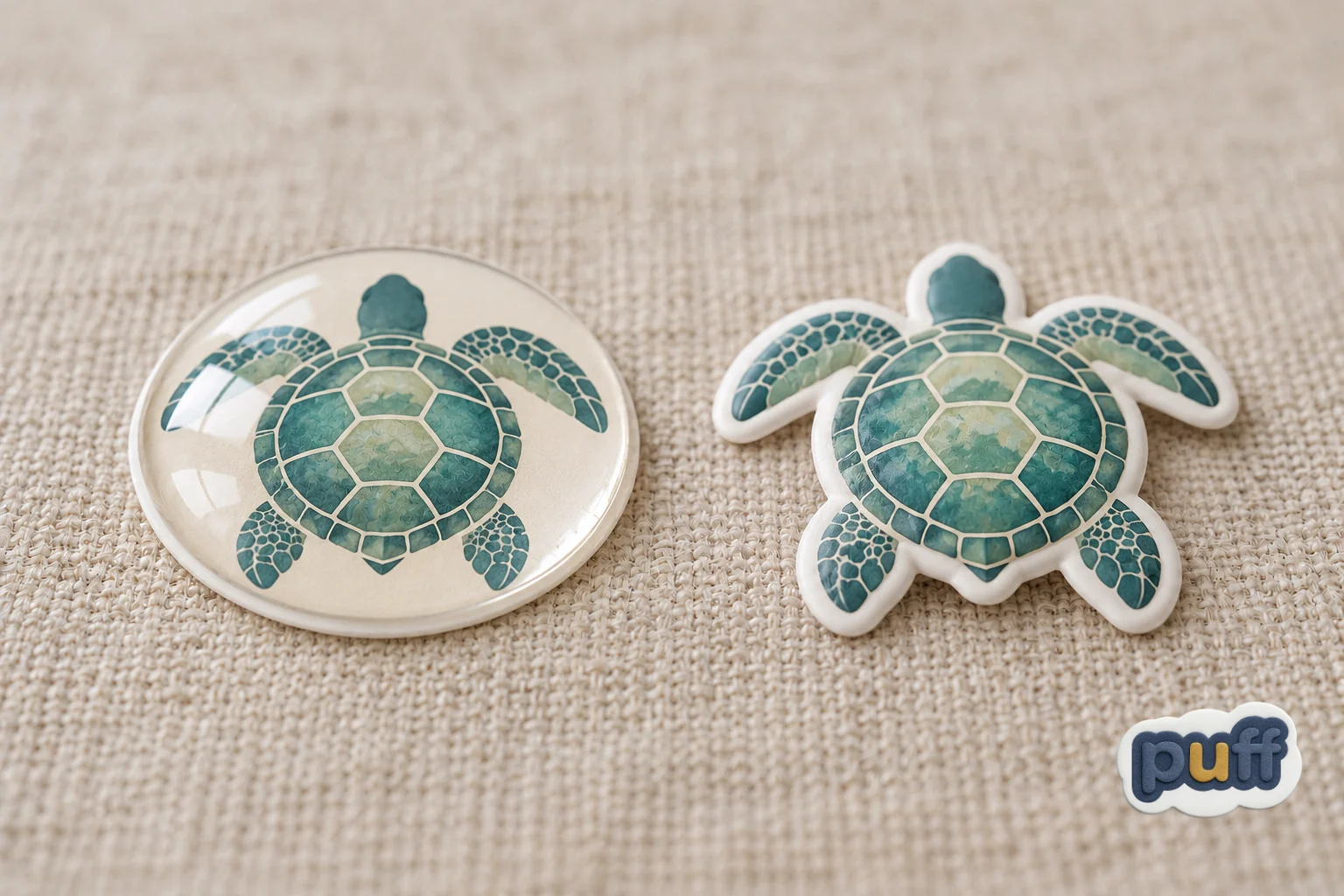
Under bright light, a clear dome sticker can look almost liquid, round and swollen like a drop of honey about to fall. Plenty of people press one expecting it to give. It does not. The thumb meets something firm and glassy, and for a split second the hand seems confused.
That moment is not a flaw in the sticker. Epoxy makes its own honest promise, one about smoothness and polish rather than give, and we compared those two kinds of depth in Soft Depth vs Smooth Depth. The stumble only happens when the look promises one tempo and the touch delivers another.
You have felt the less charming versions too. Foam that stays dented after a single press, as if it gave up. A coating sold as velvety that turns out a bit sticky, so your finger drags on the way out. A cushion that looks plump but sinks straight to the frame. In each case the material is not the problem on its own. The problem is the broken forecast, and the small, sour note of being wrong about something you were sure of.
The reverse can be lovely, though. A surface that looks firm and then gives a little more than expected can make people smile and press again. Surprise is not the enemy. Surprise that lands wrong is.
Why Squishy Things Feel Good: The Small Pleasure of Being Right
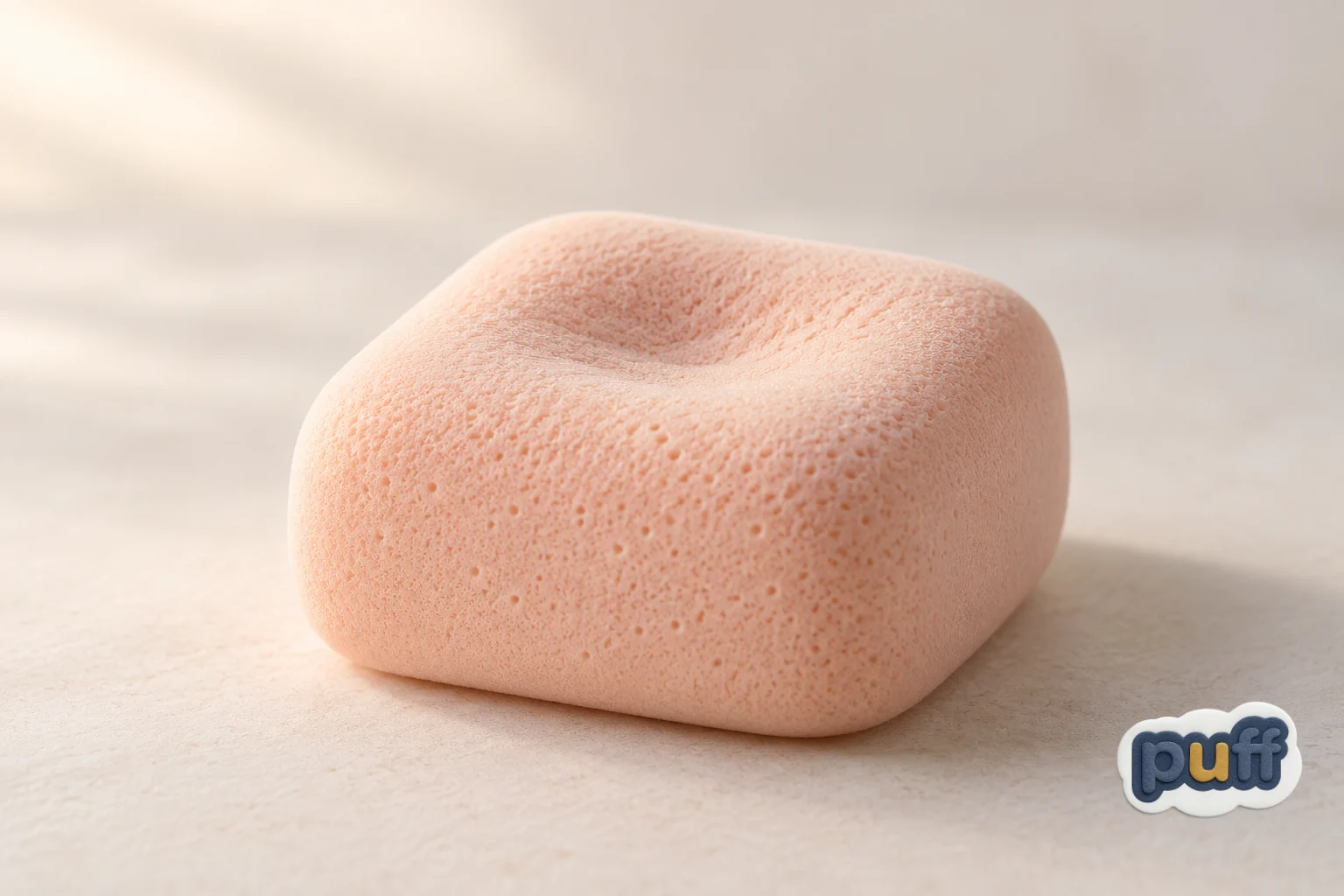
Leave a slow-rise squishy toy on an office desk and see how long it stays untouched. Someone will pick it up, squeeze it flat, and watch it swell back to shape. Then they will do it again. And again.
The pleasure is not in the squeeze. It lives in the return, in watching the forecast come true one more time. Each press is a tiny prediction, and each slow rise is the world saying yes, you were right. That gentle loop of guess and confirm is soothing in the same way a familiar song is soothing. You know what comes next, and it comes.
This is a big part of why squishy, puffy, and cushioned objects have found such a warm place in daily life. They offer a reliable little rhythm in a day full of unreliable ones. Your hand asks a question it already knows the answer to, and the answer arrives on time.
Designing for the Return
On a sticker, the whole story happens in miniature. The yield is shallow, the hold is brief, and the return takes a moment you could miss if you blinked. It still matters. Small does not mean silent to a fingertip.
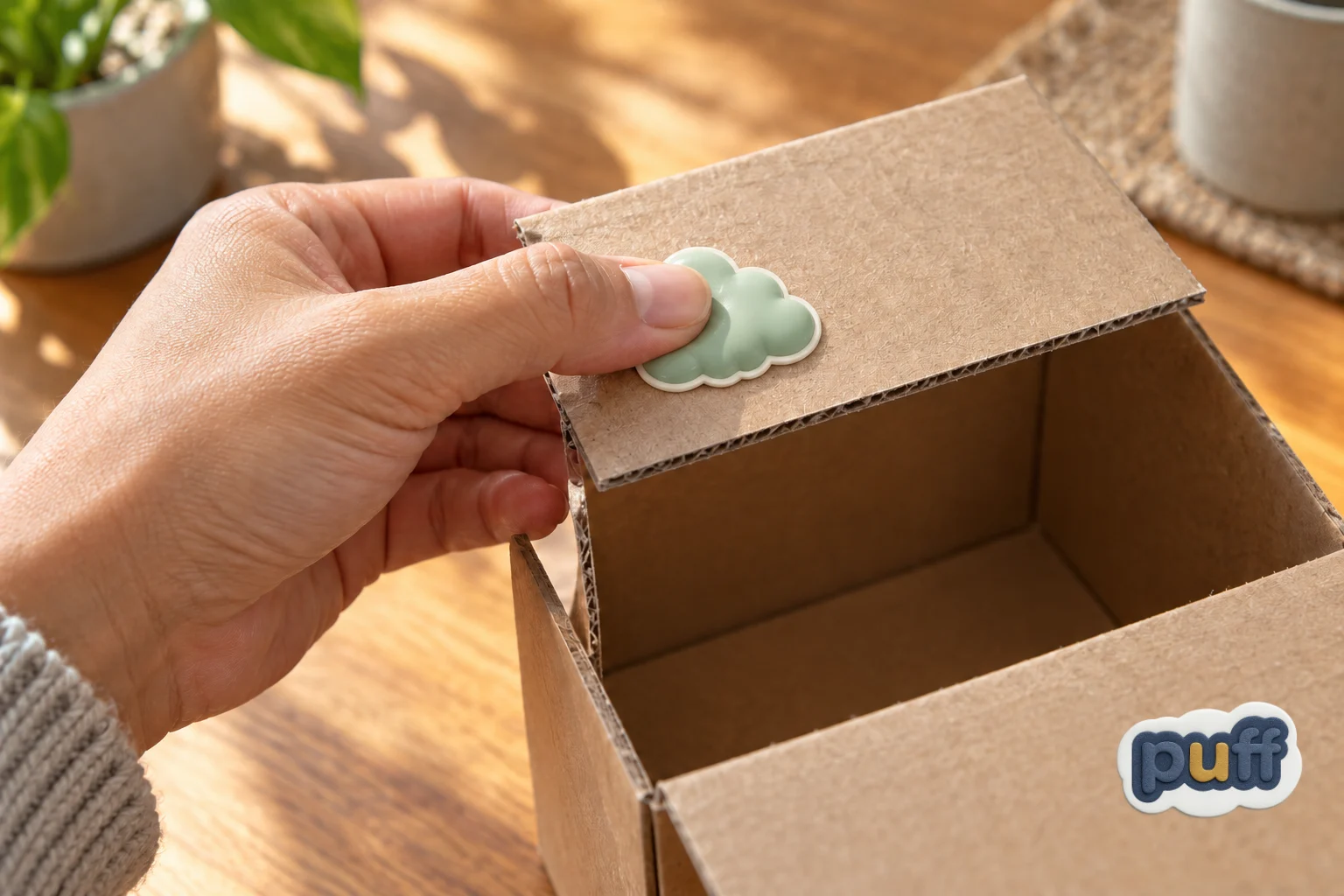
Think about how puffy stickers with a soft, raised foam center meet the thumb. The rounded shoulder of the puff helps the eye set the tempo before contact. A puffed area about the size of a fingertip invites a full press, while a thin sliver of lift invites only a glance. And the foam's gentle return is the part that lets the press feel finished, rather than taken.
Placement shapes the forecast too. A sticker on the corner of a laptop lid, on the grip side of a water bottle, or on the flap a customer lifts to open a box sits right where hands already go. In those spots the press happens again and again, often without thought, and every press is a chance for the surface to keep its word.
For a small brand, that is a quiet kind of conversation. Nobody writes a review about how a sticker came back after they pressed it. Still, a surface that keeps its promise every single time leaves a small, lasting impression that the people behind it keep theirs too.
The Agreement Between Hand and Surface
Go back to the loaf on the counter. A minute after you pressed it, the thumbprint has almost vanished, and the bread looks as if nothing happened. Something did happen, though. Your hand made a guess, the bread answered, and the two of them agreed.
We tend to talk about softness as something a surface has, the way a surface has a colour or a weight. The feeling we call soft might be better described as a small agreement, made and kept over half a second. The surface gives as your hand expects, holds where it should, and comes back the way soft things have always come back to you.
Every soft thing you love keeps that agreement. The old rabbit, the sofa cushion, the dough, the foam on a sticker no bigger than a coin. Each one, pressed, returns.