
Foam and the Feeling of Playfulness
A little girl in a waiting room presses a yellow foam star onto her hand, peels it off, and presses it on again. Nobody asked her to.
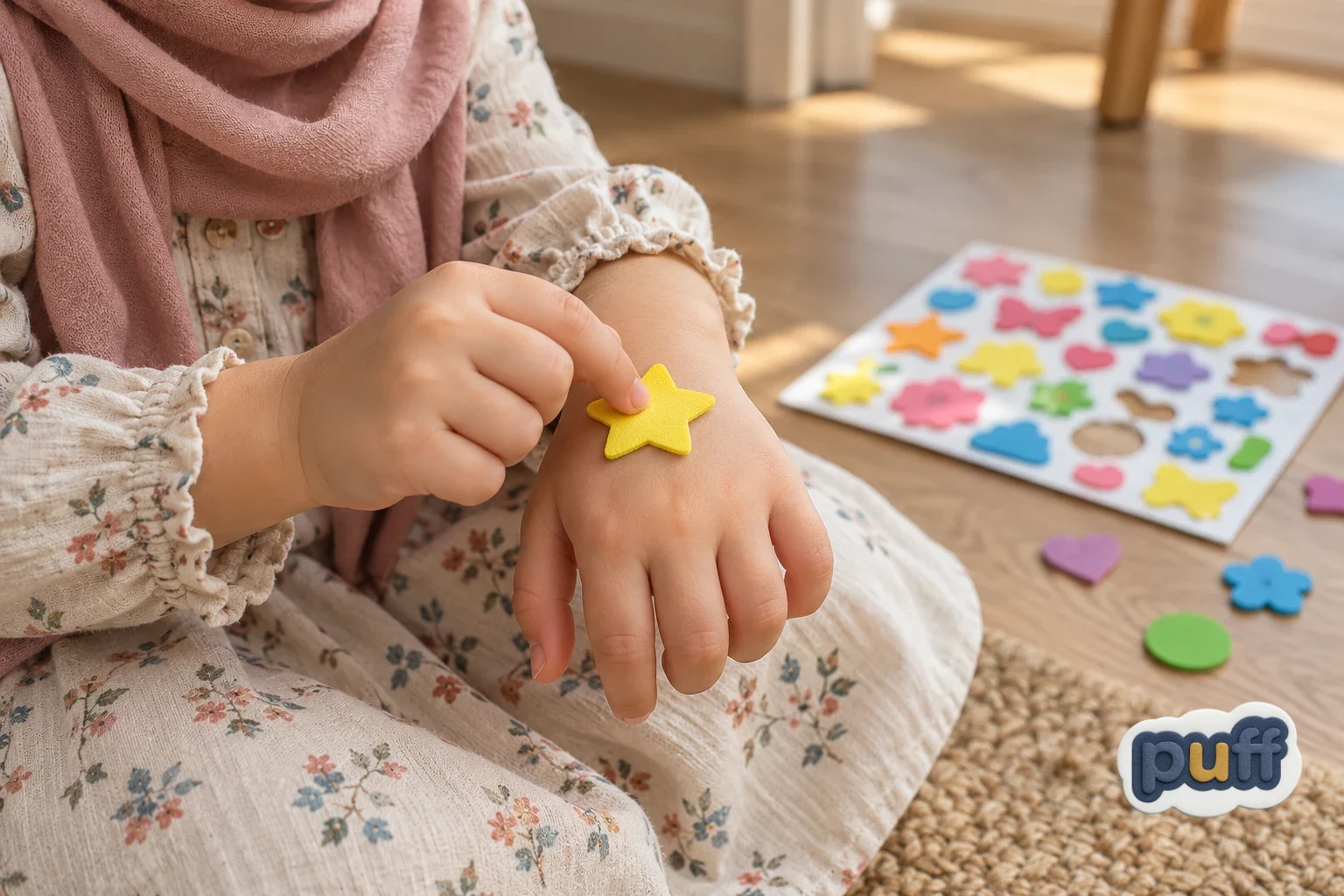
A little girl sits on the floor of a waiting room with a sheet of playful foam stickers. She peels off a yellow star, presses it onto the back of her hand, peels it off, and presses it on again. Nobody asked her to. Nobody is keeping score. Twenty minutes later the star has lost most of its stick, and she still isn't done with it.
Hand the same sheet to an adult and something similar happens, only quieter. A thumb finds the edge of a raised shape and pushes. The foam gives, then rises back. The thumb pushes again. It's a tiny private game, and most people never notice they've started playing it.
Foam has this effect on almost everyone. A material made of little more than trapped air somehow tells us that the stakes are low and the rules are loose. The common guess is that foam feels playful because it looks cute. The better answer is that foam feels playful because it is safe to get wrong.
A Material That Says "This Is Play"
At a zoo in San Francisco, the anthropologist Gregory Bateson once spent time watching young monkeys play-fight. They chased, wrestled, and nipped at each other. The nips looked like bites, but everyone involved knew they weren't. Bateson saw that the monkeys were sending two messages at once. The first was the nip. The second, sitting on top of it, was something like "this is play."
Without that second message, a nip is a threat. With it, a nip is a joke. Bateson's point reached far past monkeys. People run on the same kind of signal all the time, with a wink, a softer voice, a grin before a teasing line. The signal sets a frame, and everything inside the frame means something gentler than it would outside.
Foam carries that frame inside the material itself. Think of a foam sword in a backyard, a foam pit at a trampoline park, or foam letters stuck to the side of a bathtub. Each one copies the shape of something real, a weapon, an alphabet. The foam changes what the shape means. The sword can't cut. The letters float. The material adds its own quiet line: don't take this too seriously.
Many people can still remember the feel of those bathtub letters. They were often among the first letters a child ever held, slippery and bright, stuck to the tiles in nonsense words. Learning the alphabet that way didn't feel like a lesson. It felt like a game, and the foam had a lot to do with that. The same letters printed on a hard card would have carried the weight of a test.
That's why foam shows up so often in childhood, and why adults tend to file it there too. The link isn't childish. It's learned trust. Years of foam things that bounced off us without harm have taught a simple lesson about what soft surfaces promise.

The Forgiving Surface
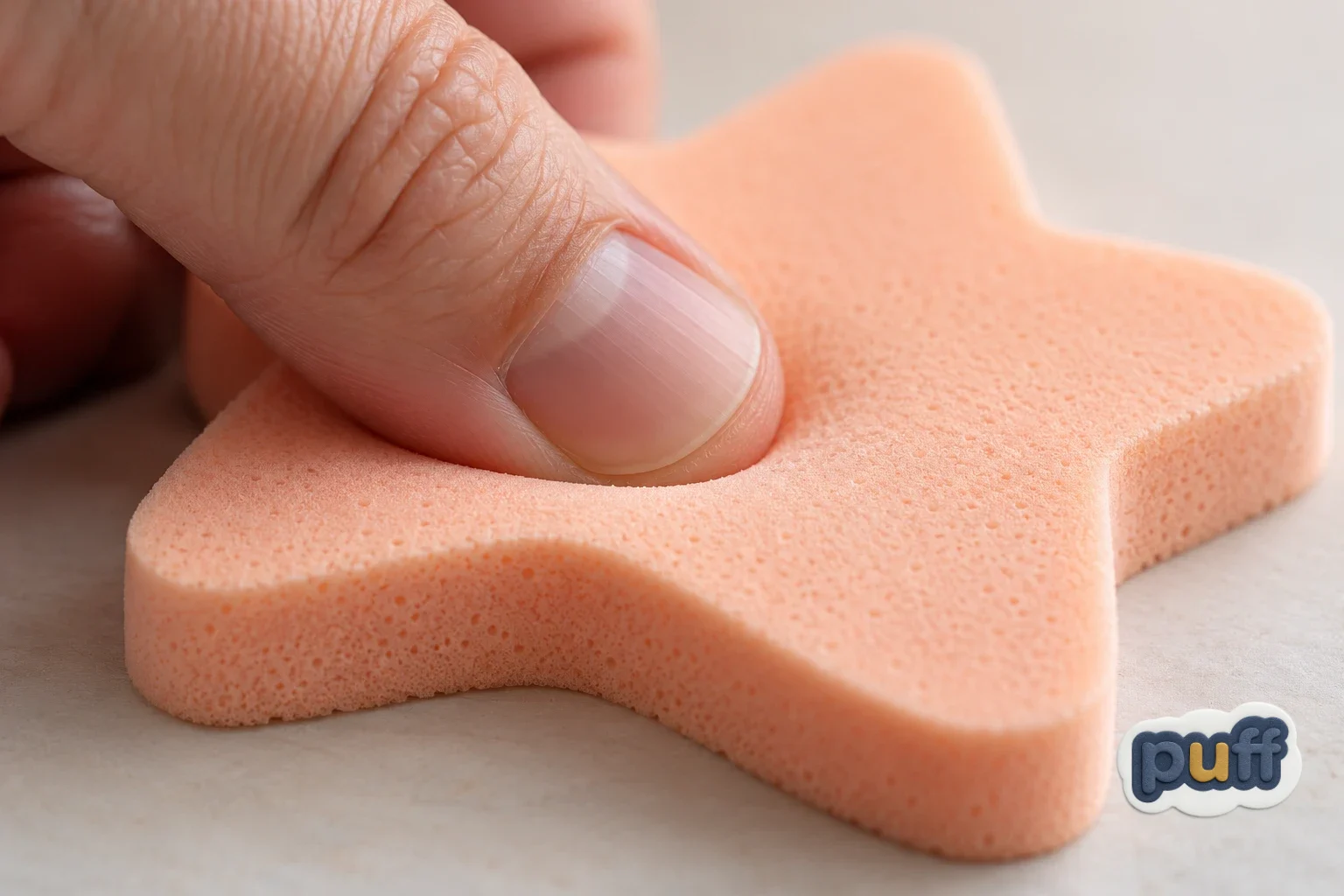
Press a fingernail into a foam sticker and lift it away. For a moment there's a small dent. Then it fills back in, the way a sofa cushion rises again after someone stands up. Nothing has been ruined. The sticker looks the same as it did before you touched it.
That small recovery matters more than it seems. Play depends on mistakes costing nothing. The psychiatrist Stuart Brown, who founded the National Institute for Play, spent years gathering the play histories of thousands of people. One of the traits he found running through real play is what he calls continuation desire: the wish to keep going. That wish only survives when an error doesn't end the game. Drop a glass ornament and the game is over. Drop a foam ball and the game has just started.
It helps to think of foam as a forgiving material, and to notice that it forgives three different things. It forgives pressure, because it springs back after a squeeze. It forgives impact, because it lands without cracking or hurting anyone. And it forgives imprecision, because a foam shape placed a little crooked tends to look charming rather than wrong. A precise surface asks for precision back. A soft one lets you relax.
Put those three together and you get the rhythm of play. Press, release, press again. Repetition without a goal is the heartbeat of almost every game a child invents, and "again" is often the first rule anyone learns. Foam is one of the few materials that answers "again" every single time.
There's a sound side to this too, or rather a missing one. Foam is quiet. It doesn't clatter when it falls or click when you tap it. A hard object announces every mistake out loud, and a room full of people hears it. Foam keeps your fumbles to itself, which makes it easier to fumble on purpose.
Why Grown-Ups Keep Pressing
Look across almost any office and you'll find a squeeze ball on someone's desk, worn smooth from use. Nobody bought it to be productive. It's there because a working day is full of tasks where mistakes cost something, and a soft object offers a few seconds where they don't.
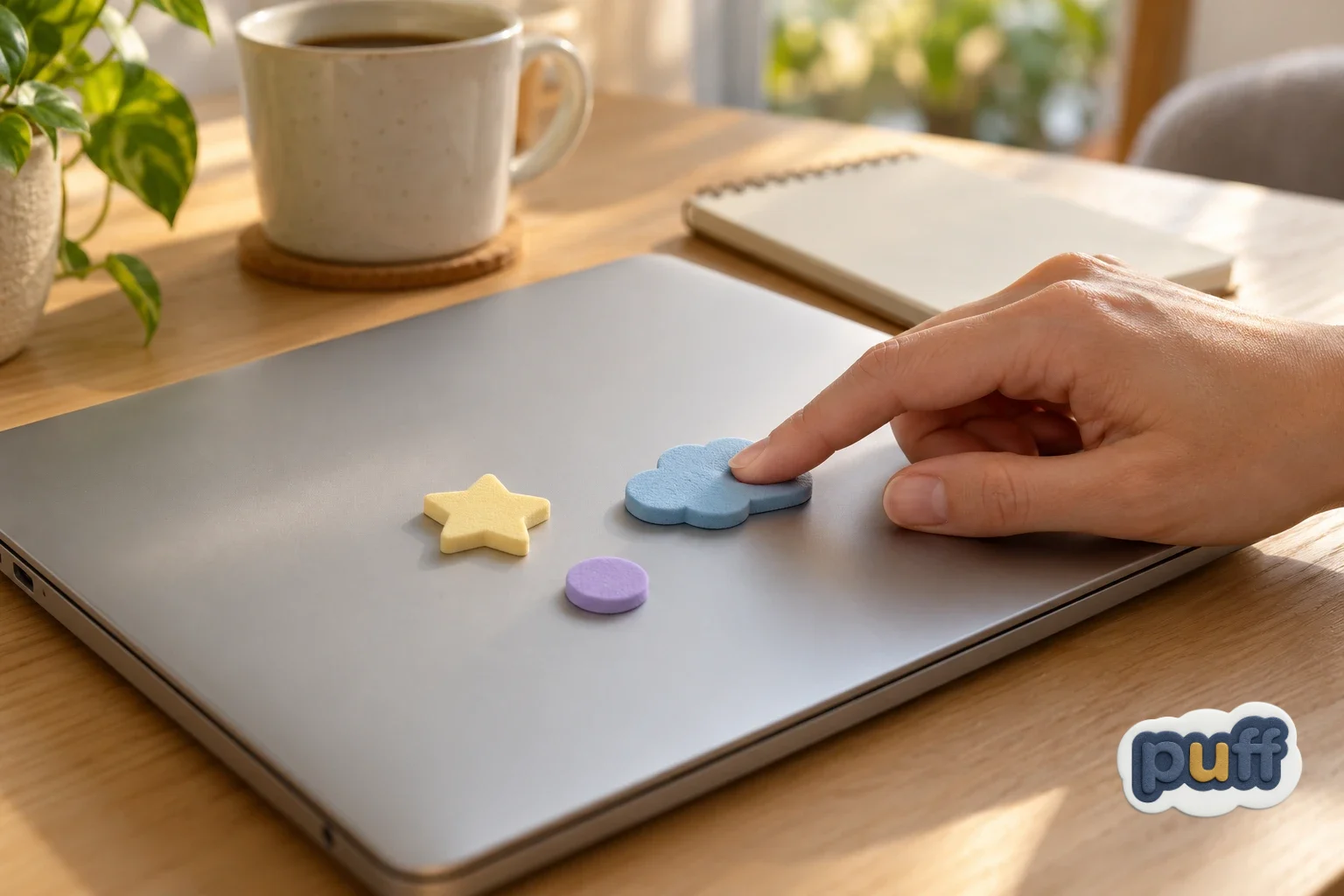
Adults don't often call this play, but it fits the shape. The squeeze has no purpose. It feels good. It invites another squeeze. The foam makes the same promise it made in the bathtub years ago: nothing here can go wrong. The same instinct explains why people reach for small joys that help on hard days, and why a soft sticker on a laptop gets pressed during a long video call more often than anyone would admit.
Hands seem to want this. Watch people in a long meeting and you'll see pens clicked, rings turned, the corner of a page folded and unfolded. These are small, restless bids for play from a body that has been asked to sit still. A soft surface gives those bids somewhere gentle to land, a place where the hand can wander without breaking anything or making noise.
This kind of playfulness isn't about being silly. It's about permission. A soft object in a serious place gives you a tiny break from being careful, and that break can be the thing that lets you go back to being careful with a clearer head.
Where Playful Foam Stickers Belong
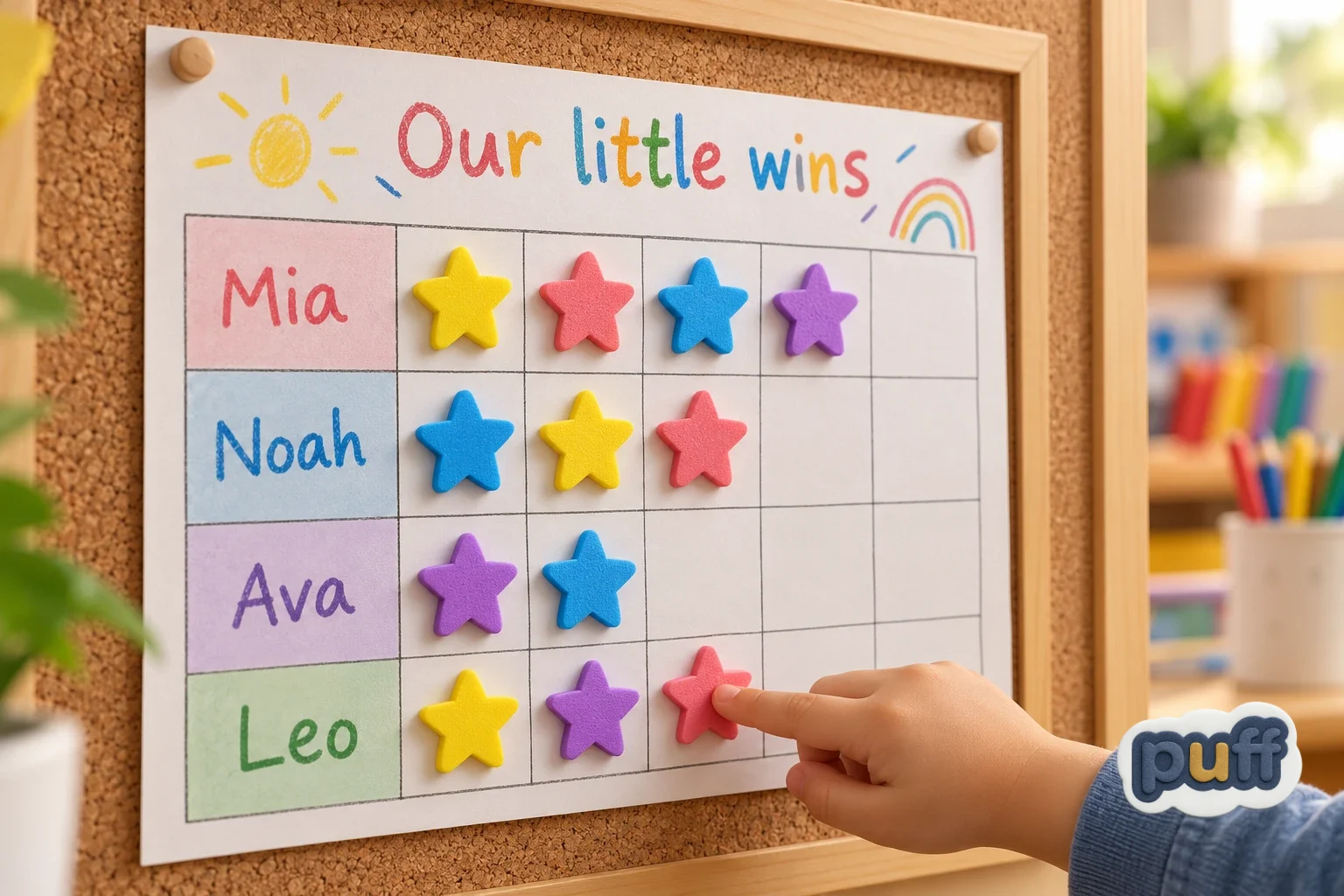
Picture a classroom reward chart, a row of names with a few chunky foam stars stuck beside each one. The children run their fingers over the stars on the way past. The chart works, in part, because the reward is something you can touch, and touching it feels like a small game of its own. It's the same pull that explains why sticker books never really disappeared: kids, and plenty of grown-ups, like to hold their small wins.
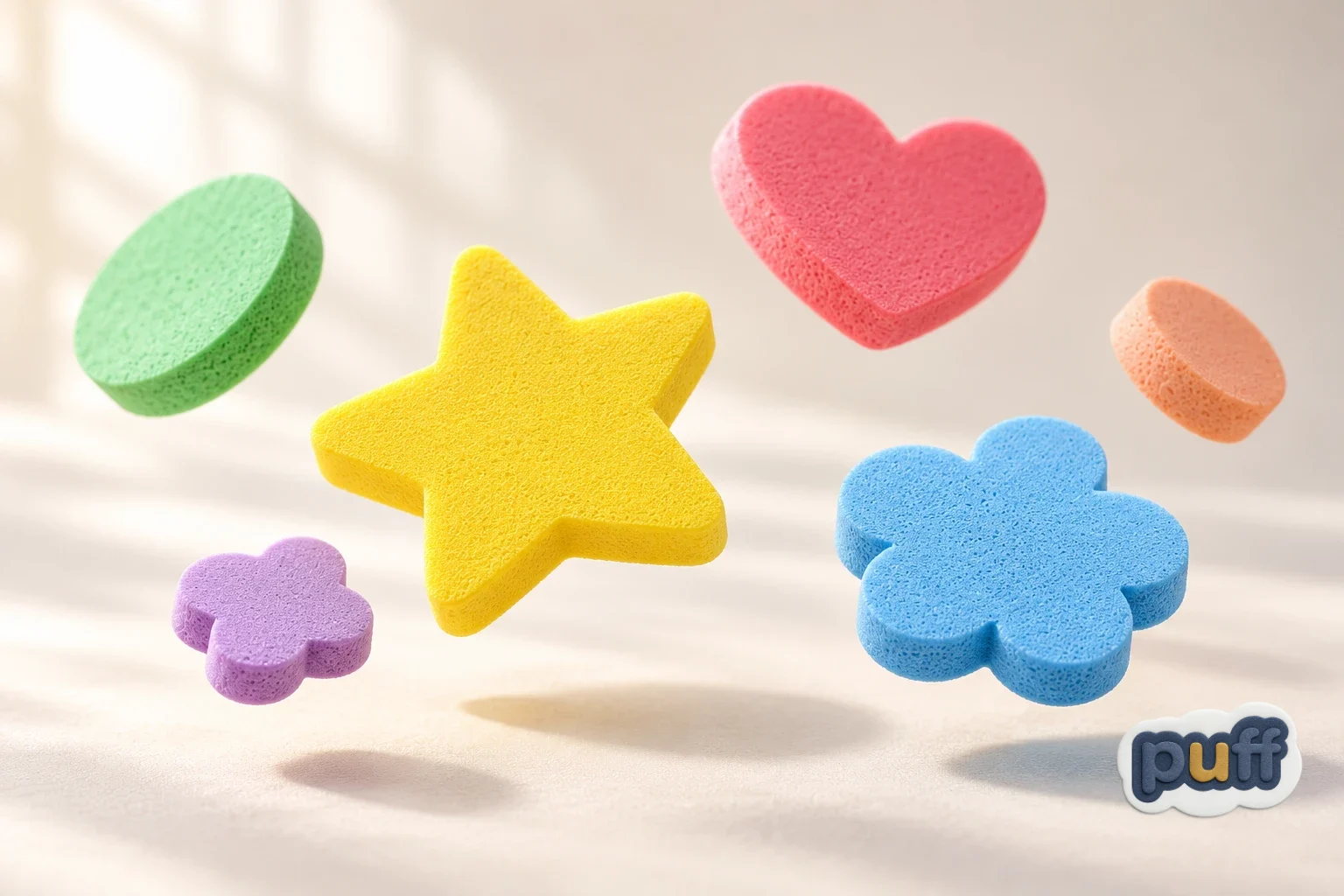
Foam suits places where touch is welcome and the mood can relax. Kids' water bottles, lunchboxes, planners, party bags, gift wrap, and event giveaways all invite a hand to linger. Plush-like foam stickers feel at home in those spots because the material does part of the talking before anyone reads a word. In places where you want a sense of weight or formality, a different surface may say it better. The point is not that foam fits everything. The point is that foam says one thing, and says it well.
The frame works best when the rest of the design agrees with it. Bright, friendly colors, simple shapes, and a little extra thickness all help the foam say what it already wants to say. A soft sticker in a grave, formal color scheme sends two messages that cancel each other out. When the look and the feel tell the same story, the playful mood comes through without anyone needing to explain it.
The Quiet Business of Saying "Relax"
When a brand puts playful foam stickers on a package, it is sending Bateson's second message to every customer who picks it up. Before the box is open, the hand has already heard: this is meant to be enjoyed. For a bakery, a toy shop, a kids' brand, or anyone whose promise is joy and ease, that message lines up with everything else they're trying to say.
The match matters more than the material. A soft, bouncy surface on a product that wants to feel easygoing makes the whole experience hang together. The same surface on something that depends on a feeling of precision might send a mixed signal. Good packaging choices start with a simple question about mood, and foam answers one mood better than almost anything else.
There's also the question of memory. People forget most of the packages they open, but they tend to remember the ones that made them smile or pause. A foam shape that gets pressed once on the way into the box, and again on the way out, has given that customer a tiny moment of play. That moment does more for how a brand feels than any line of copy on the side of the box.
The Soft Frame
We tend to think of play as something we do, a game, an activity, a break. Foam suggests that play is also a place, a setting built from materials. A soft surface draws a small fence around a moment and says that inside this fence, nothing can break and nobody can lose.
Go back to the little girl in the waiting room. By the end, her yellow star has almost no stick left. By the usual measure, it has failed at its one job. She doesn't care, because for her the job was never sticking. The job was pressing it on and peeling it off, again and again, safe in the knowledge that nothing would go wrong.
Foam doesn't teach us how to play. We already know how. It reminds us that we're allowed to.