
Why Jute Feels Honest Before You Read the Label
A jute bag sits on a café counter, slumped a little, the way a cat settles on a warm windowsill. Someone has tucked a loaf of bread inside it, along with a bunch of carrots that still have their green tops.
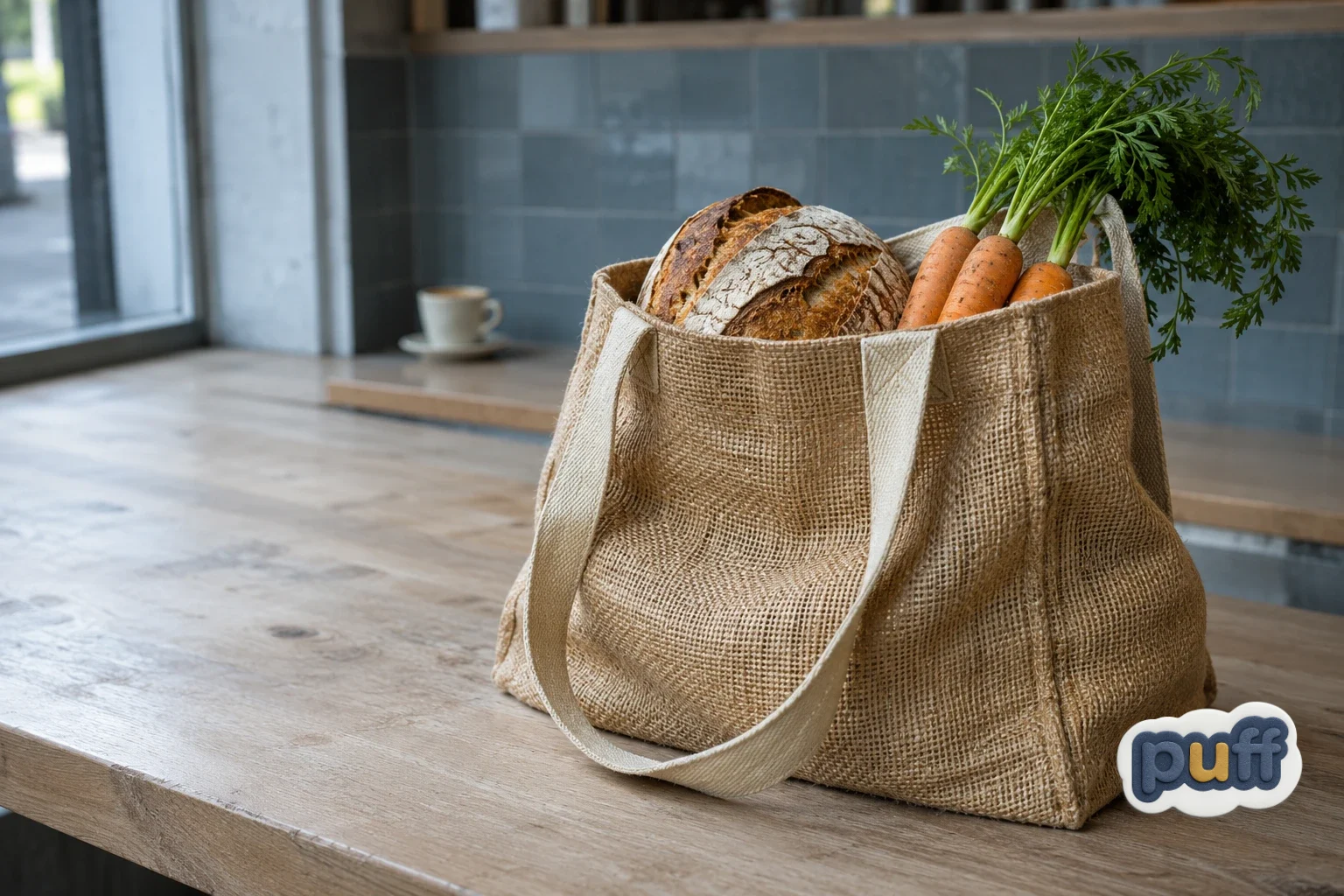
A jute bag sits on a café counter, slumped a little, the way a cat settles on a warm windowsill. Someone has tucked a loaf of bread inside it, along with a bunch of carrots that still have their green tops. Nobody in the queue has read a single word printed on the bag. Most of them have already decided something about it anyway: that it's decent, that it means what it looks like, that it isn't trying to fool anyone.
That judgment happens in a second. It also happens without much evidence, at least not the kind we tend to ask for. There's no certificate in view, no recycling arrow, no paragraph about where the fiber grew. The trust arrives first. The facts, if they ever show up, come later to confirm it.
This piece is about where that early trust comes from. The short answer is that jute shows its working. Think of a math student who writes out every step instead of only the final number. A jute bag does the same thing with its construction, putting all of it on the outside, where you can check it with your eyes and your fingertips. Its surface and its structure are one and the same. And people have an old, deep habit of trusting the things that have nothing hidden behind their face.
A Fiber That Never Learned to Pretend
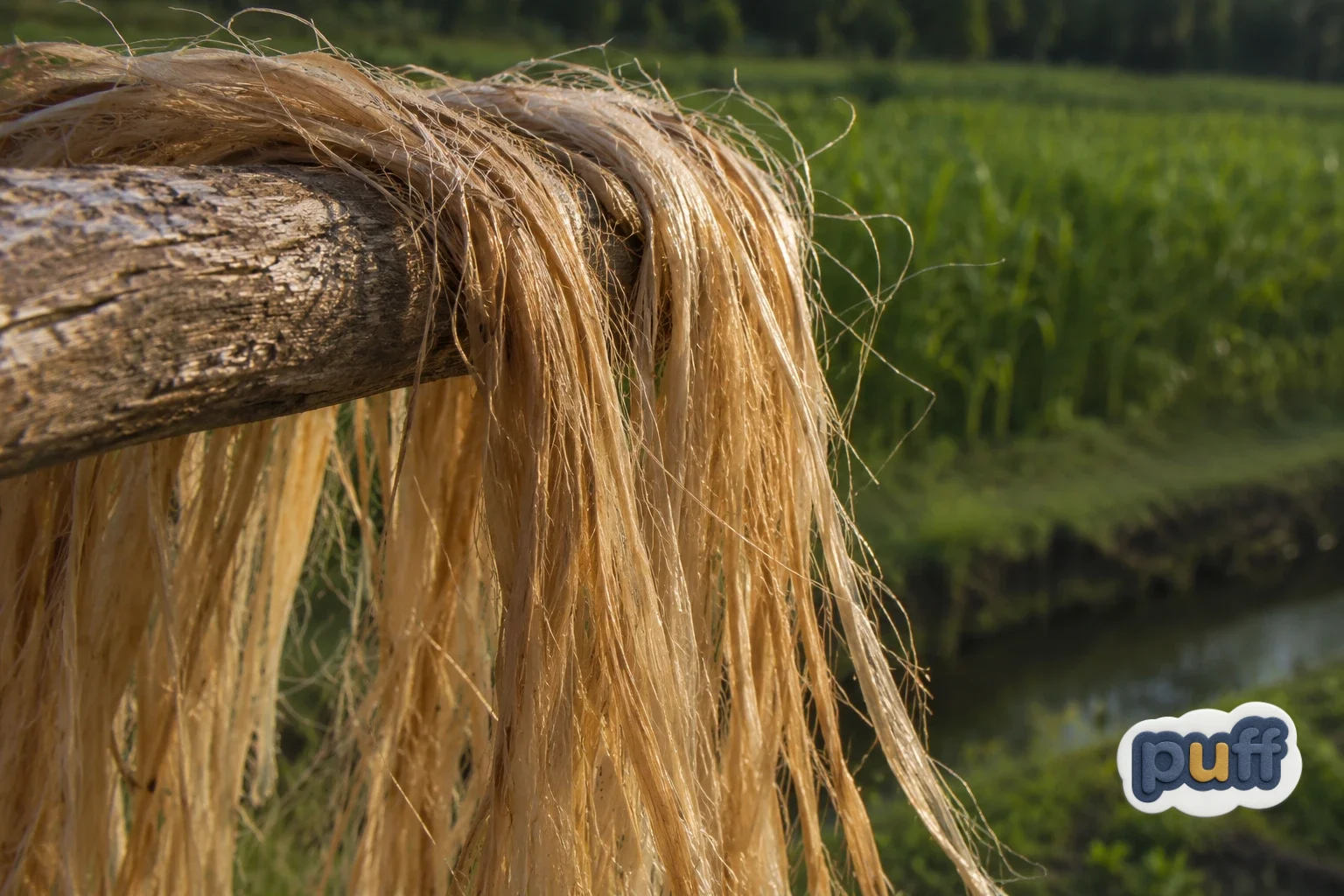
Pull a single strand from a jute bag and hold it up to the light. It looks a bit like a hair from a horse's tail: coarse, golden brown, with a faint shine running along its length. Jute comes from the inner bark of a tall, fast-growing plant, raised for centuries in the river deltas of Bengal. Farmers soak the cut stalks in slow water until the fibers loosen, then strip them away by hand and hang them in the sun to dry. People have called it the golden fiber for generations, and the name still fits.
What matters here is how little happens between the field and the bag. Spinners twist the fiber into a thick yarn, and weavers run that yarn through a loom. Nobody melts it down, casts it into a new shape, or coats it so it will hold together. The thing in your hand is still, in a real sense, the plant.
That short journey leaves marks you can see. Slubs in the yarn, where a strand swells and thins. Small color shifts from one row to the next. A loose end here and there, sticking up like a stray eyebrow hair. A factory could smooth these quirks out of plastic or film. Jute keeps them, because jute can't help keeping them.
The Old Idea of Truth in a Material
Picture a grand hallway with columns that look like veined marble, until you tap one and hear the hollow knock of painted plaster. Long before anyone printed a green leaf on a tote, people argued about whether a material could lie. The critic John Ruskin wrote The Seven Lamps of Architecture in the middle of the nineteenth century, and one of his lamps was truth. He objected to plaster dressed up as stone and cast iron pretending to be carved by hand. To him, a building that hid what it was made of told a small lie to every person who walked past.
Ruskin had cathedrals in mind, not shopping bags, but his instinct lives on in how we read everyday things. We feel a quiet unease when a surface pretends. Think of a laminate tabletop with a printed wood grain that repeats every few feet, or a faux leather sofa that cracks in a way real hide never would. Even when we can't name the problem, some part of us notices the mismatch.
Jute sets off the opposite feeling. Nothing on its surface hints at a different material underneath. The weave you see is the weave that carries the weight. That match between face and frame is what most of us mean by honesty, even if we never put the word to it.
Why We Trust What We Can Check
Run your thumb across a jute bag and you can feel the over and under of the weave, row after row. Your fingers carry out an inspection without anyone asking them to. Your eyes do the same work from a distance. They take in the gaps between threads, the slight sag of the cloth, the way the handles tug at the seams when the bag is full of groceries.
I think of this as the same-layer rule. When a material's surface and its structure live in one layer, people can check it on sight, and the things we can check feel safer than the things we have to take on faith. A glossy pouch might protect its contents better, but its strength sits in thin films you will never see. A jute bag lets you watch its strength at work. You can see which thread holds which.
There's a second reason, and it has to do with how hard jute is to fake. Printing a brown paper color onto plastic costs almost nothing, which is part of why the kraft look has drifted so far from the material it once named. Copying jute's character is a different story. You'd need the coarse hand, the uneven slubs, the faint grassy smell, the way the cloth creases and keeps the crease. When a quality is hard to imitate, we lean on it as a signal. Jute's roughness works a little like a signature that's tricky to forge.
Smell plays a bigger part than people expect. New jute carries a dry, earthy scent, close to hay, or to the burlap sacks stacked in the back of a coffee roastery. It reaches you before you read anything, and it speaks in a language older than labels. It says plant, and field, and sun.
The Look People Borrow, and Why the Copy Falls Short
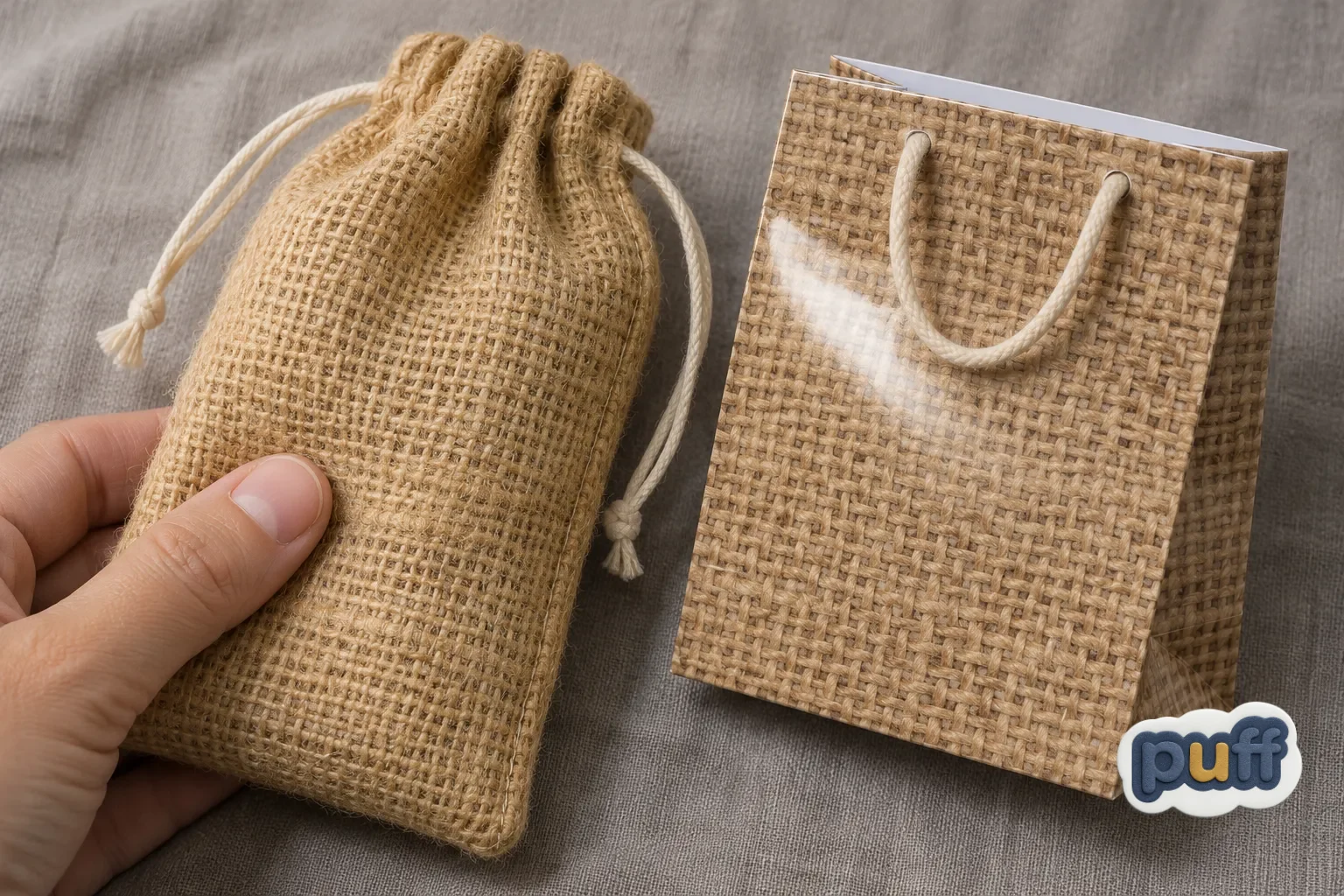
Walk through any home goods aisle and you'll find jute-style everything. Paper rugs printed with a woven pattern. Plastic baskets molded with a fake braid. Gift bags with a burlap texture laid over shiny card. The pattern shows up so often because designers know the feeling it creates, and they hope some of that honesty will rub off.
Up close, most of these copies fall apart. A printed weave has no depth, and your thumb slides across it without catching on anything. A molded braid repeats with no variation, each twist a twin of the last. The trust jute earns comes from its working parts, so a picture of those parts only gets a copy halfway there. And a copy that gets found out often feels worse than a plain surface would have, because now it has pretended.
This is where jute parts ways with the kraft story. A brown paper color can travel to almost any material and still pass at a glance. Jute's honesty stays stuck to the fiber. It doesn't travel well, and that stubbornness is part of what makes it believable.
Honest Doesn't Mean Perfect
Turn a jute tote inside out and sometimes you'll find a surprise: a thin, shiny lining fused to the inside of the weave. Some makers add it to keep out moisture, and it changes how the bag can be disposed of. Others stitch the seams with synthetic thread. A bag can feel honest and still keep a few things to itself.
So the fair way to put it is this. Jute is honest about what it shows, not about everything there is to know. That's still worth a lot, because it means the first impression and the closer look tend to agree, which is rare in packaging. The larger questions in our piece on why "paper is better" isn't the whole argument still apply to jute, as they would to any material. Where it grew, how far it traveled, and how many times it gets used all matter more than any first glance can tell you.
The honesty, in other words, is a starting point and not a finish line. It earns a bag a fair hearing. The rest of the story still has to hold up.
Letting the Fiber Do the Talking
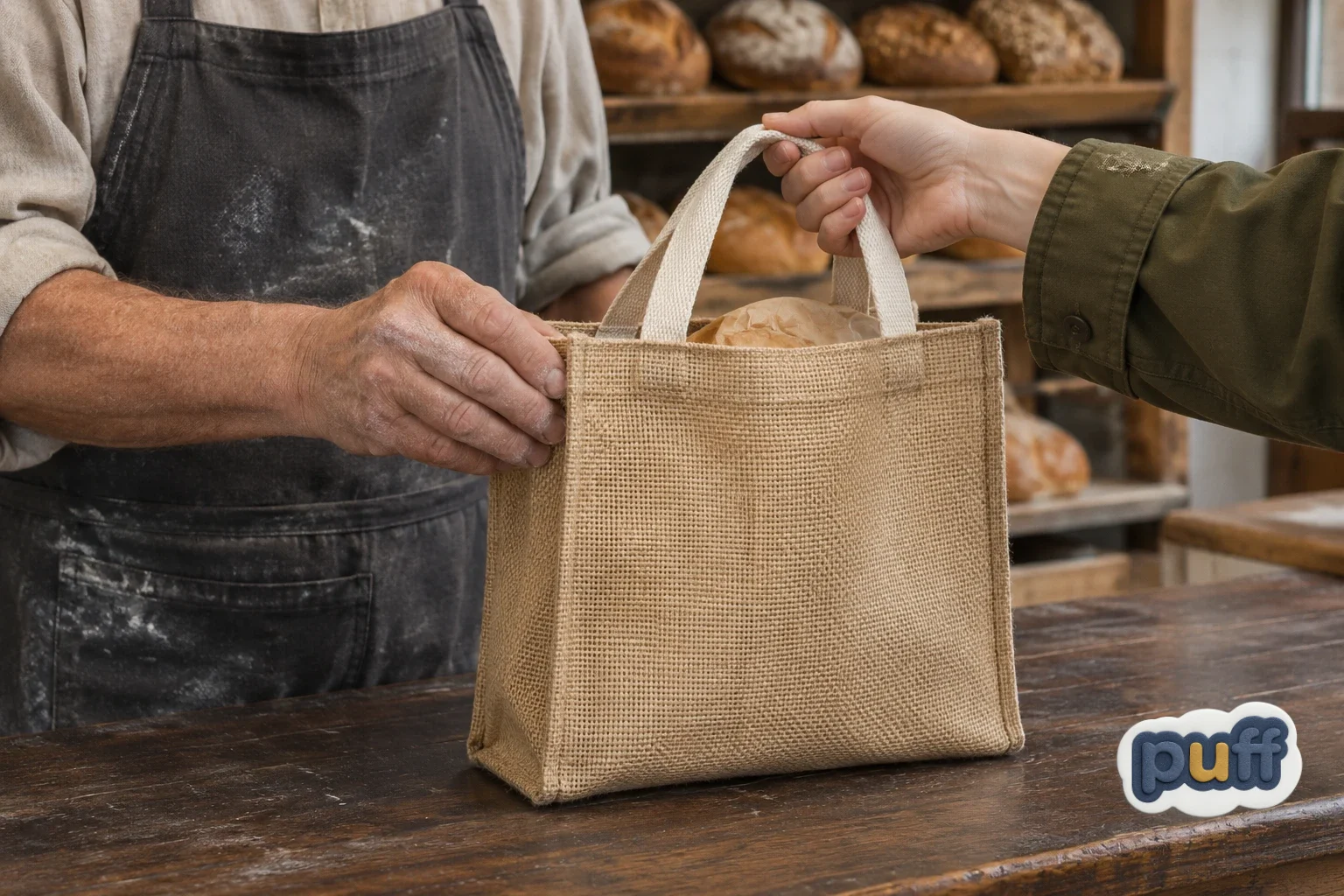
A baker hands a regular customer a jute bag with the shop's name printed small near one corner, in a single dark ink. That's almost the whole lesson in one gesture. Jute rewards restraint. A one-color mark, a small woven tag, a logo stitched in a thread that contrasts with the gold of the cloth. Each of these lets the fiber stay in charge while the brand rides along on top.
Heavy, full-coverage printing works against the very thing people trust. So do glossy plastic patches that sit on the weave like a sticker on a tree trunk. The weave needs to stay visible somewhere, even if only at the edges and handles. The rustic yet fashionable look of a well-made jute tote strikes that balance, keeping the texture front and center and giving the design just enough room to say who it came from. Our earlier look at custom jute tote bags as everyday carry covers the style side of that choice.
There's a quiet business lesson inside all this. A brand that chooses jute isn't borrowing a feeling so much as making a small promise. People will read that promise in a second, at a counter, before they read a word. The promise only holds if the rest of the brand behaves the same way, plain about what it is, and willing to let its customers check.
The Thread You Can Follow
Back at the café, the bag with the bread and carrots gets lifted off the counter. The handles tighten, the weave stretches a little, and for a moment you can see every thread taking its share of the load. Nothing about the bag changes when it works. It just shows you more of itself.
We tend to think of honesty as something people say. Jute suggests it can also be something a thing shows: a surface with no second layer behind it, a strength you can trace with your thumb. Labels can add facts, and the facts matter. But the feeling got there first, carried in by a material that never learned how to hide what holds it together.