
The Small Ceremony of Opening: What Sticker Packaging Adds to a Custom Sticker Order
A woman sits at her kitchen table with a sticker order she has waited weeks for. The sheets lie in front of her, still in their clear bags, and for a moment she does nothing at all.
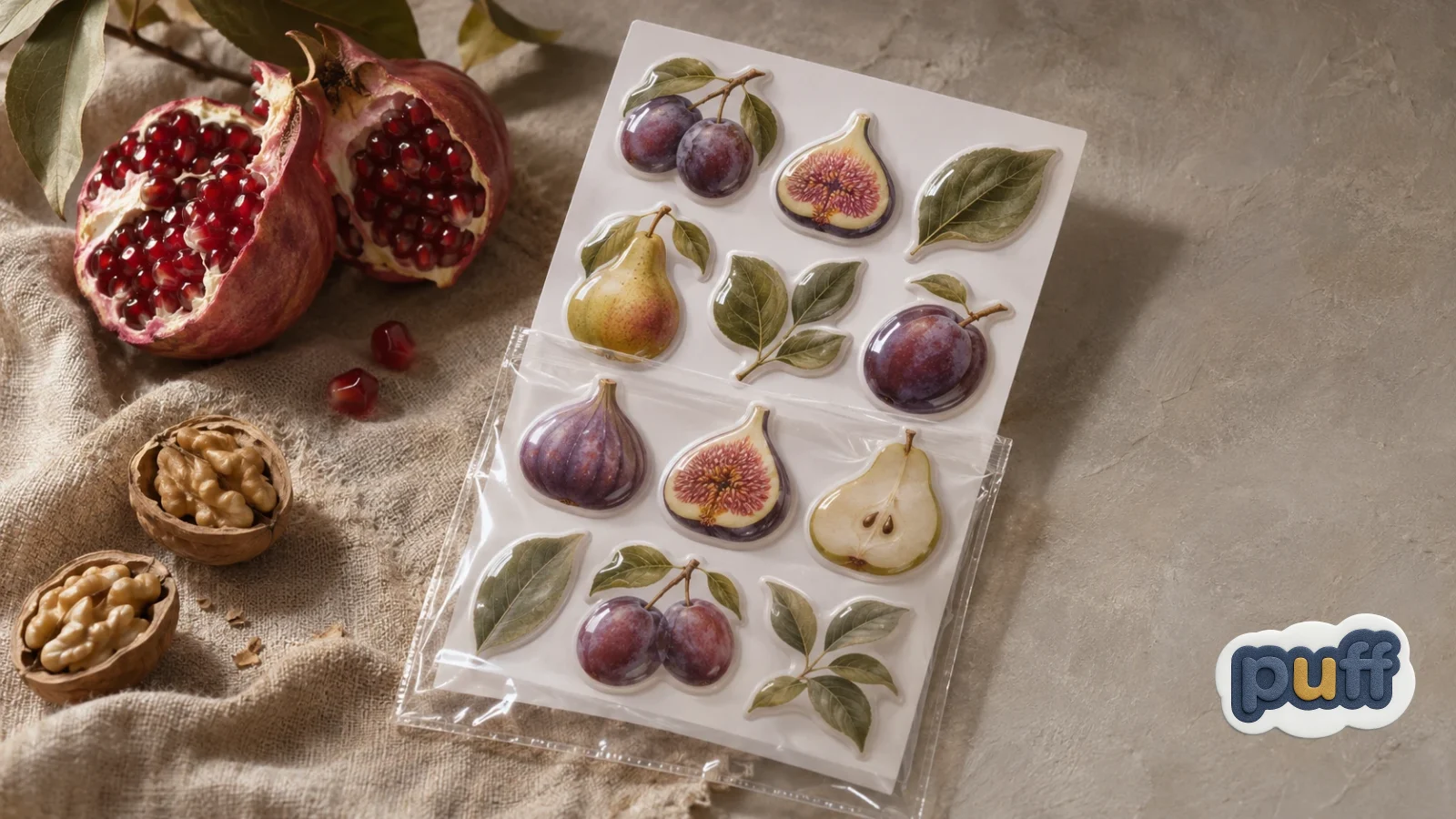
A woman sits at her kitchen table with a sticker order she has waited weeks for. The sheets lie in front of her, still in their clear bags, and for a moment she does nothing at all. She turns one over. She reads the barcode on the back of the sticker packaging without meaning to. She tilts the bag so the light runs across the raised shapes inside. Then she slides a sheet out, and even now she holds it a while before she peels anything.
Nothing in that minute was useful. No sticker went on a notebook, a laptop or a jar. And yet, if you asked her a month later what she remembered about the order, she would describe the minute at the table.
Packaging protects a sheet and carries a brand, and both of those matter. The part people remember is smaller and a little stranger. Sticker packaging puts a short pause between having a thing and using it, and that pause is where a sticker starts to feel like it belongs to someone.
A Product You Spend Every Time You Use It
Watch someone with a brand-new sheet and you will see a kind of careful budgeting. A finger hovers over the best sticker, drifts to a smaller one, comes back, and settles nowhere. The sheet stays whole for another day.
Stickers are odd objects in this way. Most things we buy stay whole when we use them. A mug is still a mug after the coffee is gone, and a scarf is still a scarf after a cold walk. A sticker works the other way round. The moment you peel one, the sheet loses a piece, and that piece rarely goes back the way it came. Every use is a small, permanent spend.
This is why so many people hold on to stickers for years without using them, a habit we looked at in Why We Save Stickers We Never Use. The hesitation makes sense. The first peel ends something. The sheet stops being complete, and it can never be complete again.
Packaging adds a gentler step in front of that one. Think of it as two doors. The first door is the package: you open it, and nothing is lost. The second door is the first peel, and it only swings one way. Good packaging is the first door, and its quiet job is to make the walk to the second one feel like an occasion instead of an accident.
Without the first door, a sheet arrives already halfway to being used. It slides out of a parcel loose, gets set on a desk, and the first peel happens between two other tasks. With it, the person arrives at the sheet, sees it whole, and chooses the moment. The sticker is the same. The way it enters someone’s life is not.
Why a Few Small Steps Change the Whole Experience
Some people fold a tea bag wrapper twice and tuck it under the cup before they take a sip. Others open a new book by fanning the pages near their face to catch the smell. Nobody taught them to do it. The habit simply makes the tea and the book feel more like theirs.
Researchers who study these habits find they do real work. Michael Norton at Harvard Business School has spent years on everyday rituals, and one finding keeps coming back: a fixed sequence of small steps before an experience makes the experience itself feel richer. In one study he worked on, people who broke a chocolate bar in half and unwrapped it in a set order before eating it said it tasted better, and they took longer to enjoy it.
Anthropologists have a word for the in-between moment those steps create. Liminality describes the state of standing on a threshold, no longer before and not yet after. Weddings, graduations and coming-of-age ceremonies are all built around it. A sticker order is not a rite of passage, and it would be silly to pretend otherwise. But the shape is the same in miniature. The package holds you at the threshold for a few seconds, and those seconds make the arrival count.
What makes packaging so good at this is that the steps already live in the object. Nobody has to invent a ritual. A bag has an opening. A card has a front and a back. A sheet has a first sticker and a last one. The packaging lays the steps out in order, and the hands follow them without being asked.
Backing Card or Poly Bag
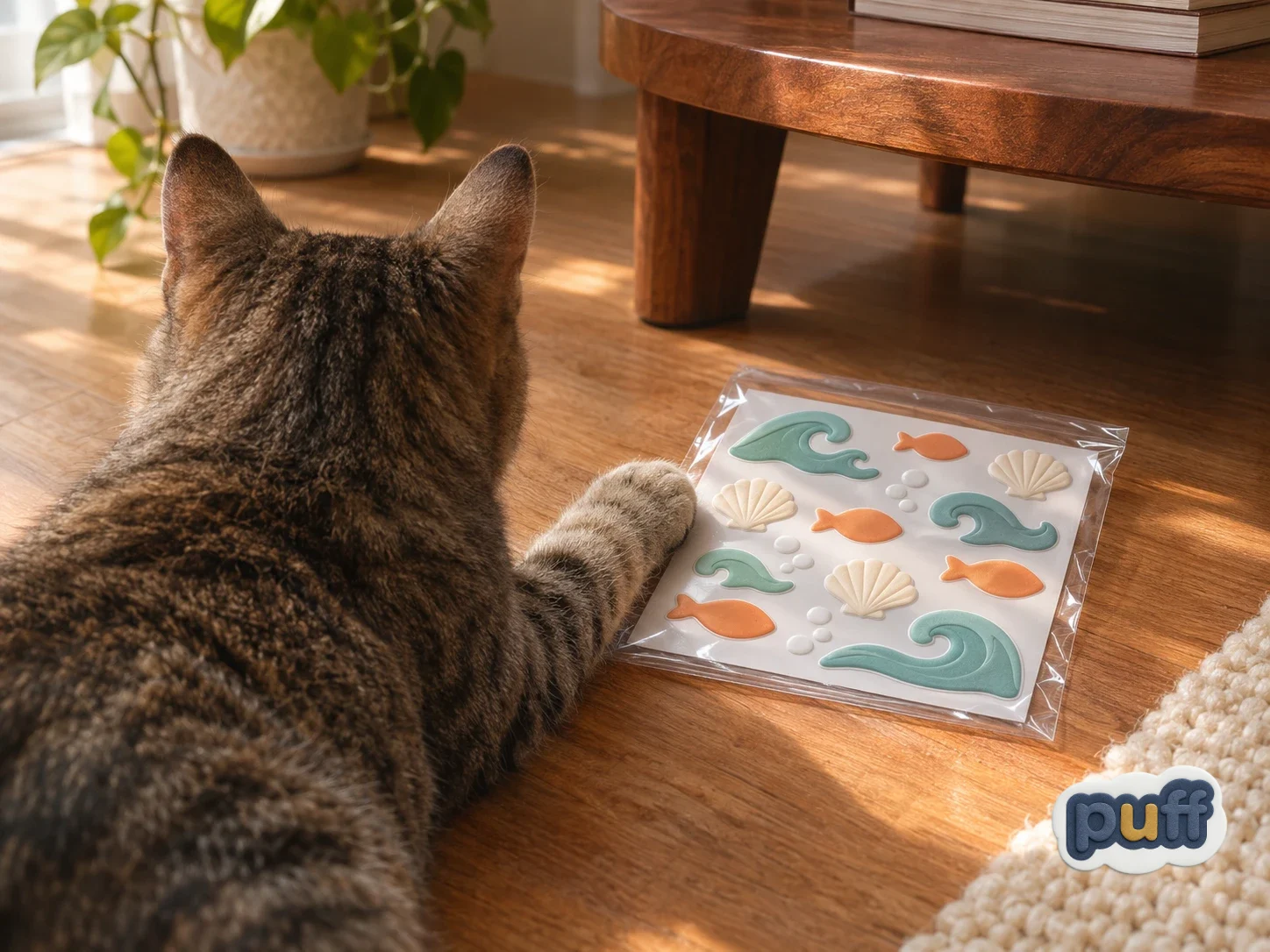
Hang a sheet on a backing card and it stands still, like a picture in a frame. Slip the same sheet into a clear bag and it changes. Light slides over the film, the raised shapes press against it from the inside, and the whole thing seems to ask to be picked up.
For sticker sheets, packaging takes one of these two forms: a backing card or a poly bag, with the customer’s own barcode printed. They look like plain, practical choices, and they are. They also set up the moment of opening in two quite different moods.
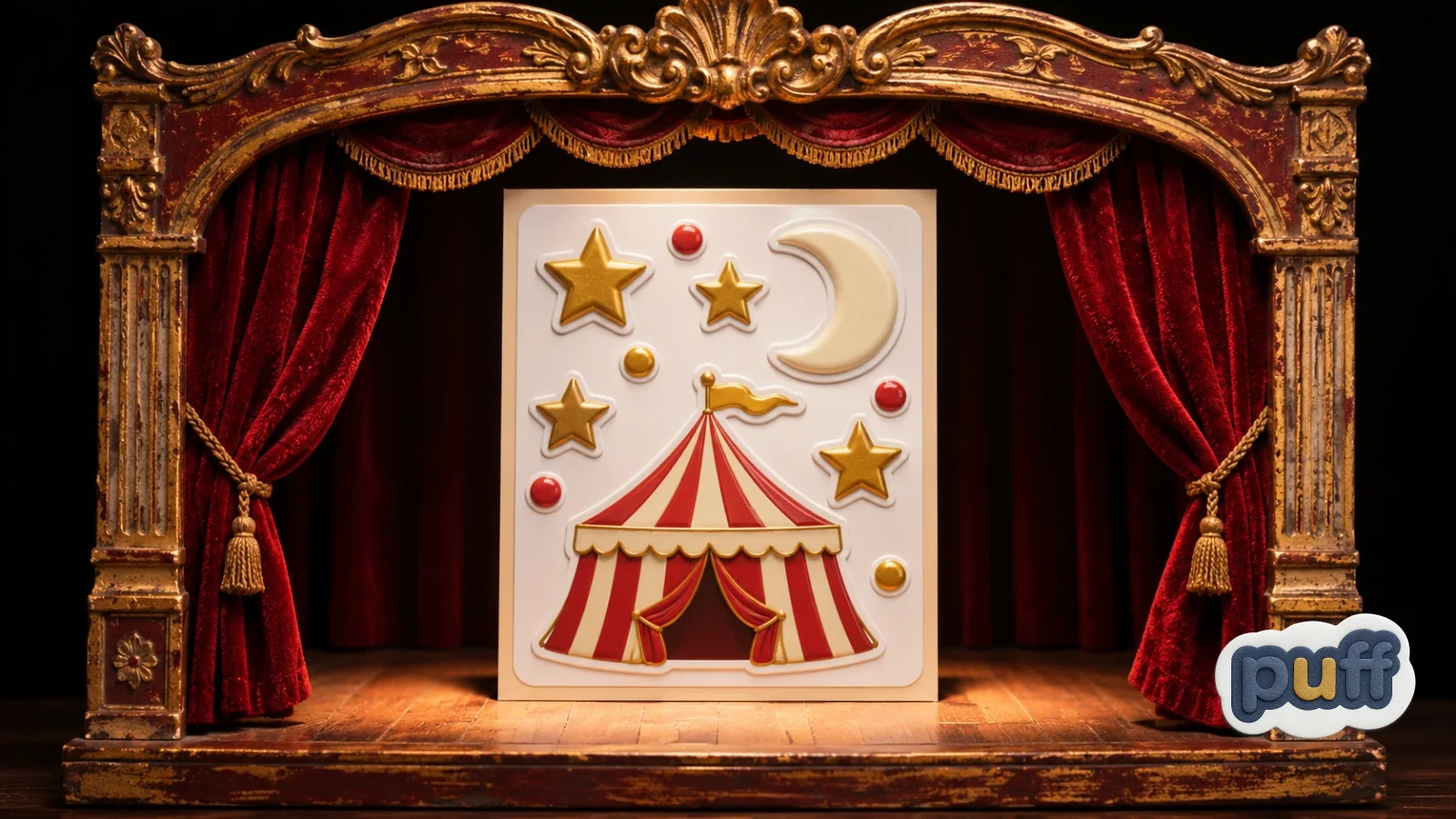
The card is a stage. It holds the sheet flat, gives it a front and an edge, and asks to be looked at before it is touched. It suits sheets that work like a small picture, where the layout is part of the charm. Opening it is a lift. The sheet comes away from its frame, and for a second you hold both.
The bag is a window. You see everything and touch nothing, and that thin barrier builds the wanting. Puffy shapes show well through clear film because the light catches every raised edge. Opening it is a slide. The sheet comes out into your hand, and the first touch of soft foam lands with nothing in between.
Neither one is the better choice. They are two ways to build the first door. The useful question is what the sheet should feel like in the first ten seconds: something to admire, or something to reach for.
Sticker Packaging Choices That Shape the First Minute
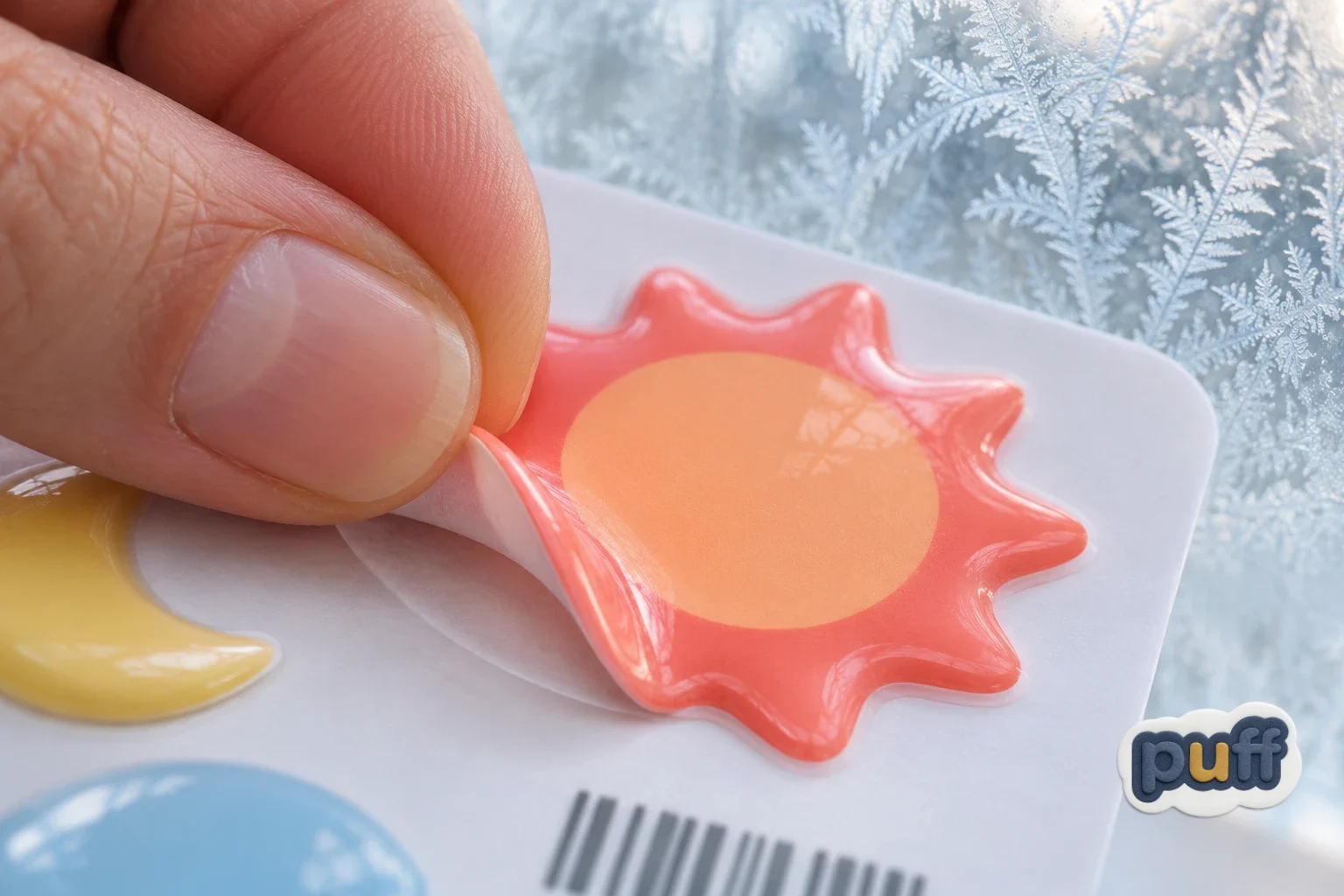
Turn a packed sheet face down and look at the back. Most people do this at some point in that first minute, and what they find there tells them how much care went into the whole thing.
A few choices decide how the first minute goes. The first is where the eye lands. Whatever shows first through the bag or on the front of the card sets the tone for everything after, so the strongest sticker on the sheet belongs where it can be seen before anything is opened. If the best shape hides behind a fold or sits buried in the middle of small fillers, the moment of opening loses its lead actor.
The second is the barcode. It turns a sheet into something a shop can sell, and it also sits right where curious hands go looking. Plan where it falls in the pack design so it looks like part of a finished product, not a sticker stuck on in a hurry. A tidy back says the front was no accident.
The third is which door fits the journey. A sheet that will hang on a hook or stand in a display tends to suit the stillness of a card. A sheet that travels in a subscription box or a parcel before anyone sees it tends to suit the protection and the window of a bag. Custom puffy sticker sheets can be packed either way, so the choice can follow how people will meet the product rather than the other way round.
The last choice is the easiest to forget: make the first peel inviting. A sticker near a corner, with a little room around its edge, is an open hand. A sheet where every shape is packed tight makes the second door feel stuck. The package can only lead someone to the threshold. The sheet has to let them through.
What the Pause Is Worth to a Brand
A shop owner unpacks a carton of sticker sheets on a quiet morning and pins them to a rack one by one. Each one hangs straight, faces the same way, and carries the same small promise on the back. By lunchtime the rack looks less like a delivery and more like a collection.
This is where the pause starts to pay. A sheet that arrives with a clear first door is easier to give as a gift, easier to sell at a counter, and easier to keep. It looks finished in a way a loose sheet never quite does. For a brand, that finish is the difference between a sticker someone uses up and a sticker someone remembers getting.
For anyone building a range for shops, our guide to Puffy Sticker Sheets for Resale covers the practical side: layout, artwork rules, retail packing and order timing. The point here is narrower. Of everything in a sticker order, the packaging is the part that gets used up first, so the stickers inside don’t have to be. Not yet.
The Part You Throw Away
Back at the kitchen table, the woman has peeled her first sticker and pressed it to the corner of a notebook. The empty bag lies beside her. She doesn’t throw it away. She folds it in half and slips it into the drawer where she keeps the rest of her stickers, as if it were part of the set.
We tend to think of packaging as the bit that comes off before the real thing begins. With stickers, it may be closer to the truth to say the real thing begins with the packaging. It is the first door, the one that costs nothing to open, placed in front of the one that costs a little every time. It asks for a few seconds of someone’s day, and it gives back the feeling that the sheet in their hands was meant for them.