Why a Bag Has to Fail Slowly to Succeed
A bag of coffee sealed eight months ago still smells close to roasting day. Close, but not quite. It has been losing a very slow argument with the air.
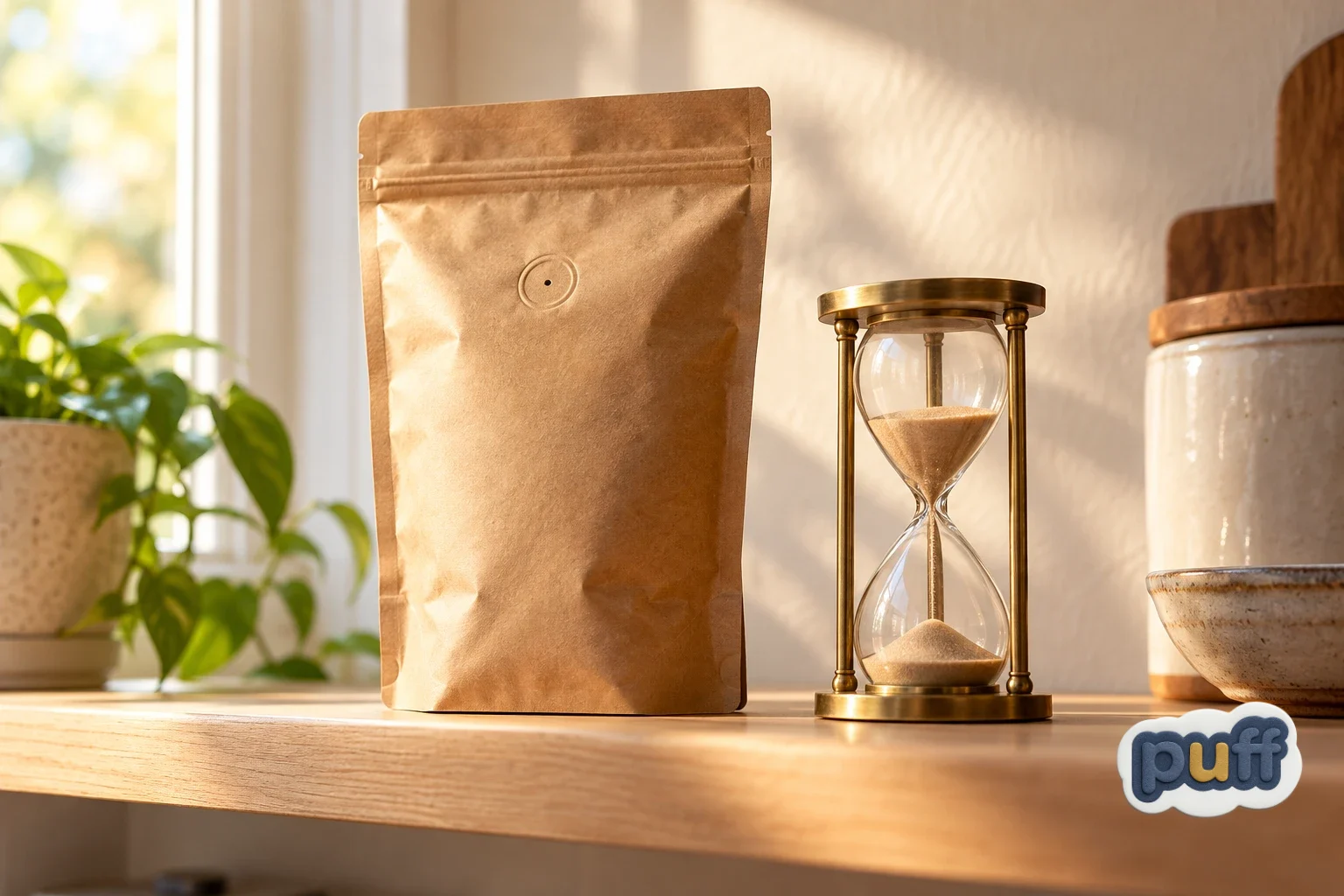
There is a bag of coffee on a kitchen shelf somewhere that was sealed eight months ago. Nobody has opened it. The little valve on the front stopped sighing long ago, the foil has a few soft creases from the ride in a delivery box, and the beans inside still smell close to the way they did on roasting day. Close, but not quite the same. That small gap is what packaging shelf life is really about. Something has been getting in. Something has been getting out. The bag has been losing a very slow argument with the air around it, and it has been losing on purpose.
That last part sounds strange, so stay with it for a moment. We tend to picture a good package as a wall. It keeps the outside out and the inside in, and the day it stops doing that, it has failed. But no bag made of film, foil, or paper is a perfect wall. Every one of them lets something through. The real craft of packaging lies in deciding how fast that happens, and in making sure the failure arrives late, without fuss, and on schedule.
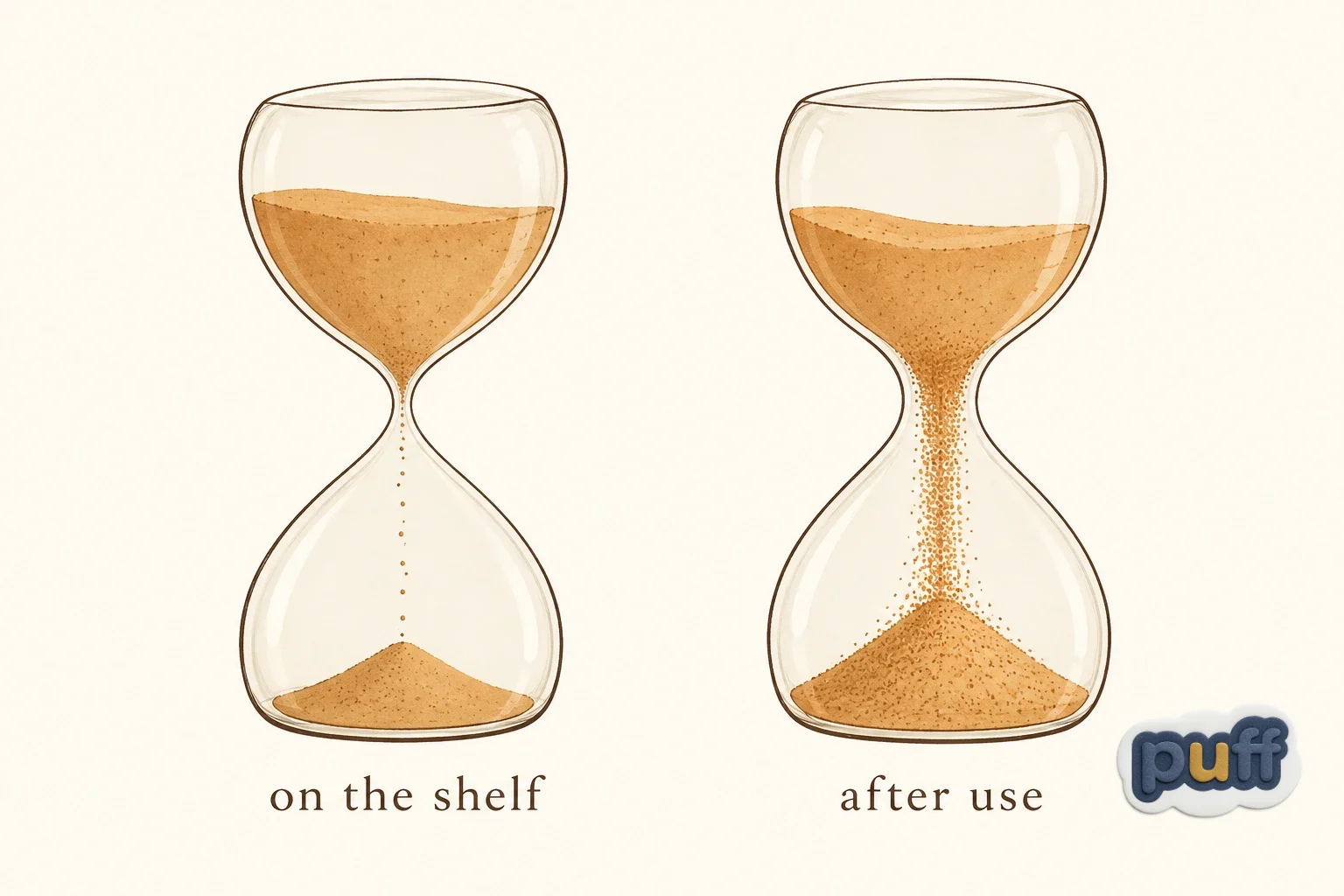
Seen this way, a well-made bag is less like a locked door and more like an hourglass. Sand moves through it the whole time. What the maker controls is the width of the neck.
The Hourglass, Not the Wall
Picture a closed pouch under a microscope strong enough to show single molecules. The film feels solid under your fingers, but at that scale it looks more like a crowded forest, long chains of polymer tangled together with tiny gaps between them. Oxygen and water vapor wander through those gaps, one molecule at a time. Scientists call this permeation, and it never stops. It only slows down or speeds up.
Earlier in this series we looked at how oxygen, moisture, and light each run their own clock against a food. Here the focus is on the bag itself, and on a simple fact that labels leave out: every bag is a timer. The materials we praise as "high barrier" are the ones with the narrowest neck. The metallized layer inside a kraft mylar bag slows the flow to a trickle, while a plain paper sack lets it pour. Neither one stops it. A coffee roaster, a tea shop, a jerky maker, each of them is choosing how long their hourglass should run.
Thinking of it this way changes the question you ask about a package. "Does it keep things out?" has only one honest answer, which is no, not forever. "How long does it hold, and what happens at the end?" is the question that tells you something real.
Two Ways to Fail
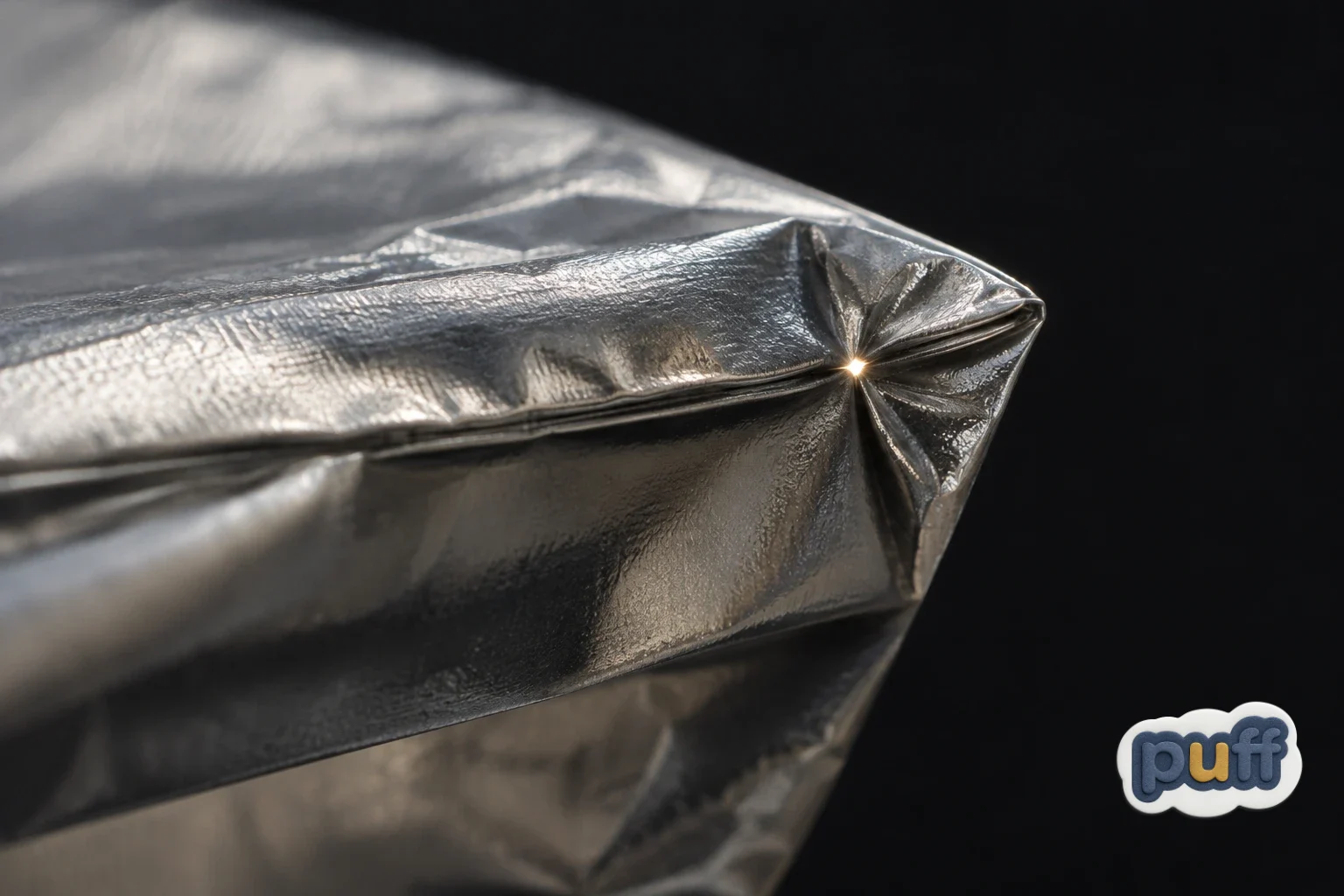
Hold a snack bag up to a bright window and you might catch a pinprick of light where a corner was folded too hard. That tiny point is a different kind of failure from the slow leak through the film, and the difference matters more than it first seems.
Packaging engineers sort failure into two broad families. The first is gradual: permeation through the film, a seal that breathes a little, a drift in freshness that anyone can measure and predict. The second is sudden: a puncture, a seal that peels open in a hot truck, a crack in a thin metal layer after someone bends the bag back and forth one time too many. The designer plans for the first kind. The second kind is an accident.
A good bag tries to turn every possible failure into the first kind. It wants to fail like a candle burning down, never like a balloon popping. When people in the trade call a pouch "robust," this is what they mean. Not a pouch that lets nothing through, but one that refuses to fail all at once.
The engineer and writer Henry Petroski spent much of his career arguing that failure is the best teacher an engineer has, and that every successful design carries a quiet record of failures someone saw coming. A bridge stands because its builders imagined, in detail, every way it might fall. A bag works the same way on a smaller stage. The wide seal, the gusset that spreads the weight, the extra layer at the fold: each one is a small answer to the question of how this thing would break.
The Promise Printed on the Back: What Packaging Shelf Life Means
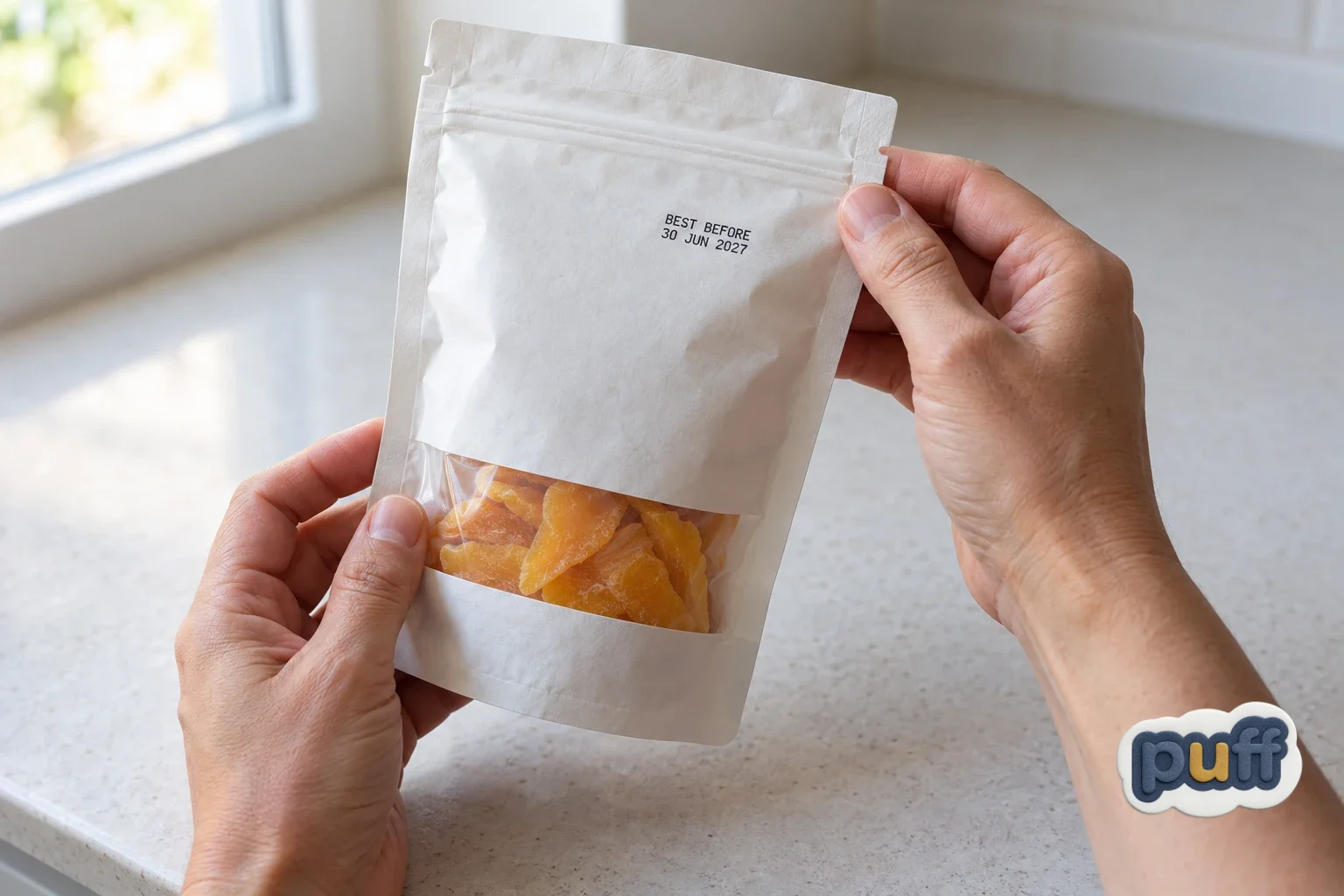
Turn almost any packaged food over and you will find a date. Best before, use by, freshest until. It looks like a fact about the food, and it is, but it is also a promise about the bag. Somebody tested that pouch, watched how fast the outside crept in, and wrote down the moment the taste would start to fade. That date is the visible face of the hourglass. Packaging shelf life, in plain terms, is just the bag telling you where the sand will be.
Here is the quiet psychology of it. People trust a package more when it tells them how it will fail. A printed date, a small note that says "reseal after opening," a zipper that clicks shut. These are honest admissions that the bag has limits, and they feel reassuring because being predictable is a kind of care. We relax around things that behave the way they said they would, whether that is an old friend, a train timetable, or a pouch of dried mango.
Sudden failure breaks that trust in a way slow failure never does. A bag of chips that has gone a little soft near the end of its life feels normal, almost expected. A bag that arrives already split feels like a broken promise, even if the food inside is fine. The loss in grams might be the same. The feeling is not.
Designed to Let Go
There is a twist hiding in this idea, and you can find it at the top corner of most pouches. A tear notch is a failure point put there on purpose. The same film that has held out against the air for months is given one tiny nick, so that when a hand finally pulls, the bag gives way in a clean line instead of stretching and fighting back. A good pouch is designed to fail on two timelines at once: patient and steady on the shelf, then quick and willing the moment someone wants in.
The coffee bag carries a second version of the same idea. Freshly roasted beans keep breathing out carbon dioxide for days after they are packed. Seal them in a bag with no way out and the gas has nowhere to go, so the pouch puffs up and strains at its seams. A one-way degassing valve lets that gas leave while making it hard for outside air to come back in. It is a small, deliberate leak, built so the bag never has to fail in a worse way.
A zipper that clicks shut after the first opening strikes the same bargain again. The factory seal is gone, so the bag offers a weaker one in its place and hands the hourglass to the person holding it. Every one of these details is someone deciding, in advance, exactly where and when the bag should give. Nobody has found a perfect answer. Many people have found good answers for specific foods and specific journeys, and that may be the most honest goal anyway.
What This Means for the Bag in Your Hand
A crumpled foil pouch at the bottom of a backpack has been aging faster than the one on the shelf, and you can see why once you know where to look. Sharp folds, made again and again, can open hairline cracks in a thin metal layer, widening the neck of the hourglass where you cannot see it. A warm, sunny spot speeds up every clock inside. Pressing the air out before you reseal a bag buys back some of the time you spent opening it.
For anyone choosing packaging for their own product, the same idea works as a guide. Start with how long the product needs to stay at its best. Then think about the roughest moment in its journey: the hot van, the tight shipping box, the shelf under strong lights. Pick a bag whose slow failure outlasts the first and whose build survives the second. In our complete guide to custom mylar bags, we looked at why that metallic finish became such a trusted signal. Underneath the signal, this patient, measured holding is the real work the material does.
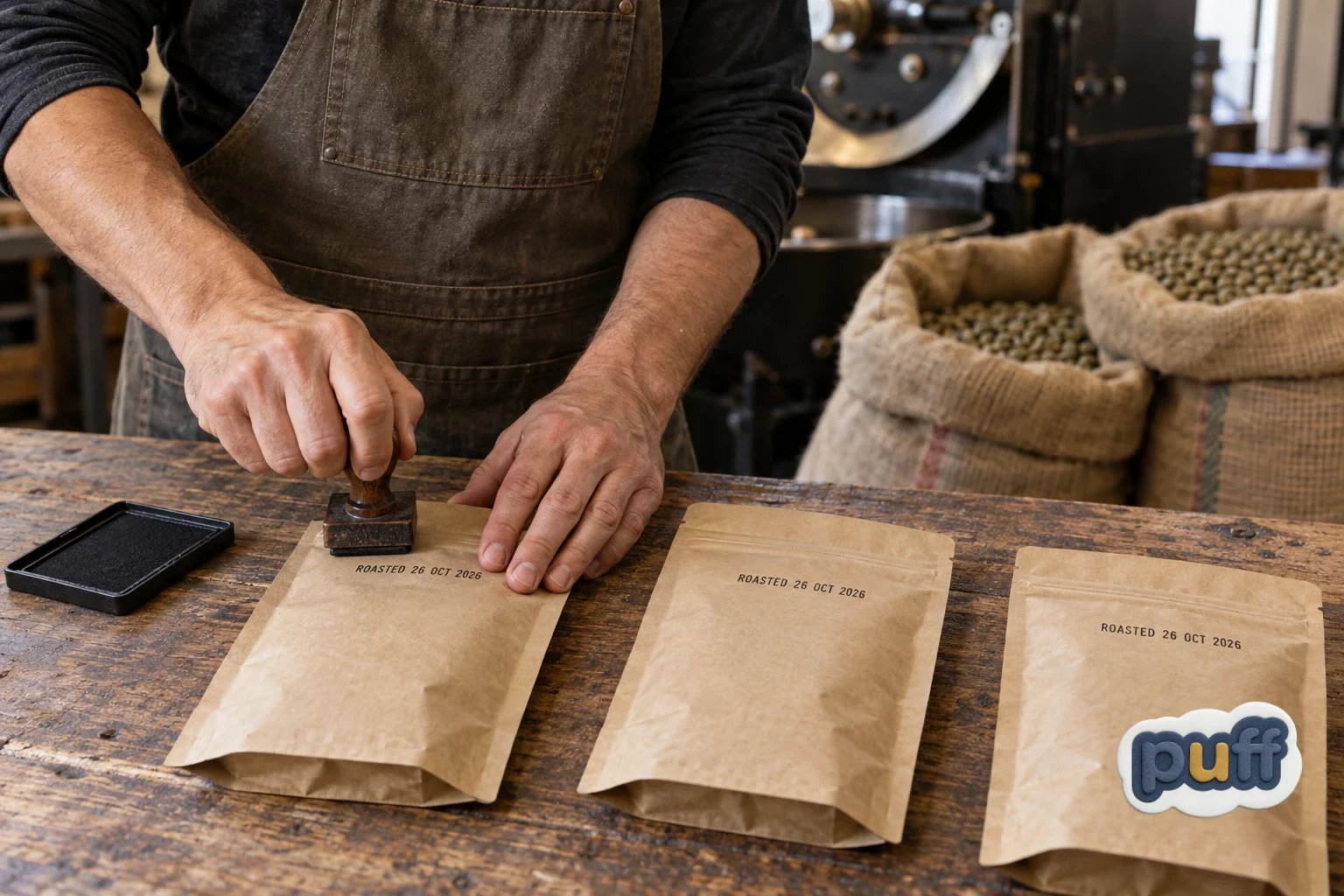
Words like "airtight" sound comforting on a product page, but the more truthful promise is softer: this bag fails slowly enough that you will never notice. That kind of honesty can become part of a small brand's character. A coffee roaster who prints a roast date and a sensible drink-by window is telling customers the truth about time, and customers pick up on it. Brands that admit their packaging has limits often sound more trustworthy than brands that promise forever.
The Grace of a Slow Ending
Go back to that coffee bag on the shelf, eight months sealed. If you opened it today, the smell would still rise up to meet you, a little quieter than it once was. That gentle fading is not the bag giving up. It is the bag doing what someone asked it to do, a long time ago, before the beans were even roasted.
Most of the things we keep work this way. A favorite sweater thins at the elbows over years, not overnight. Old photographs soften at the edges. Even a sticker on a laptop lid wears down a little with every trip, its colors easing into something calmer. We don't love things because they last forever. We love them because they change slowly enough to stay with us while we need them.
So the next time you tear open a pouch, it is worth noticing what it managed. It let time in, a little at a time, and still handed over what it was carrying in good shape. A bag earns our trust not by keeping time out, but by letting it in gently.