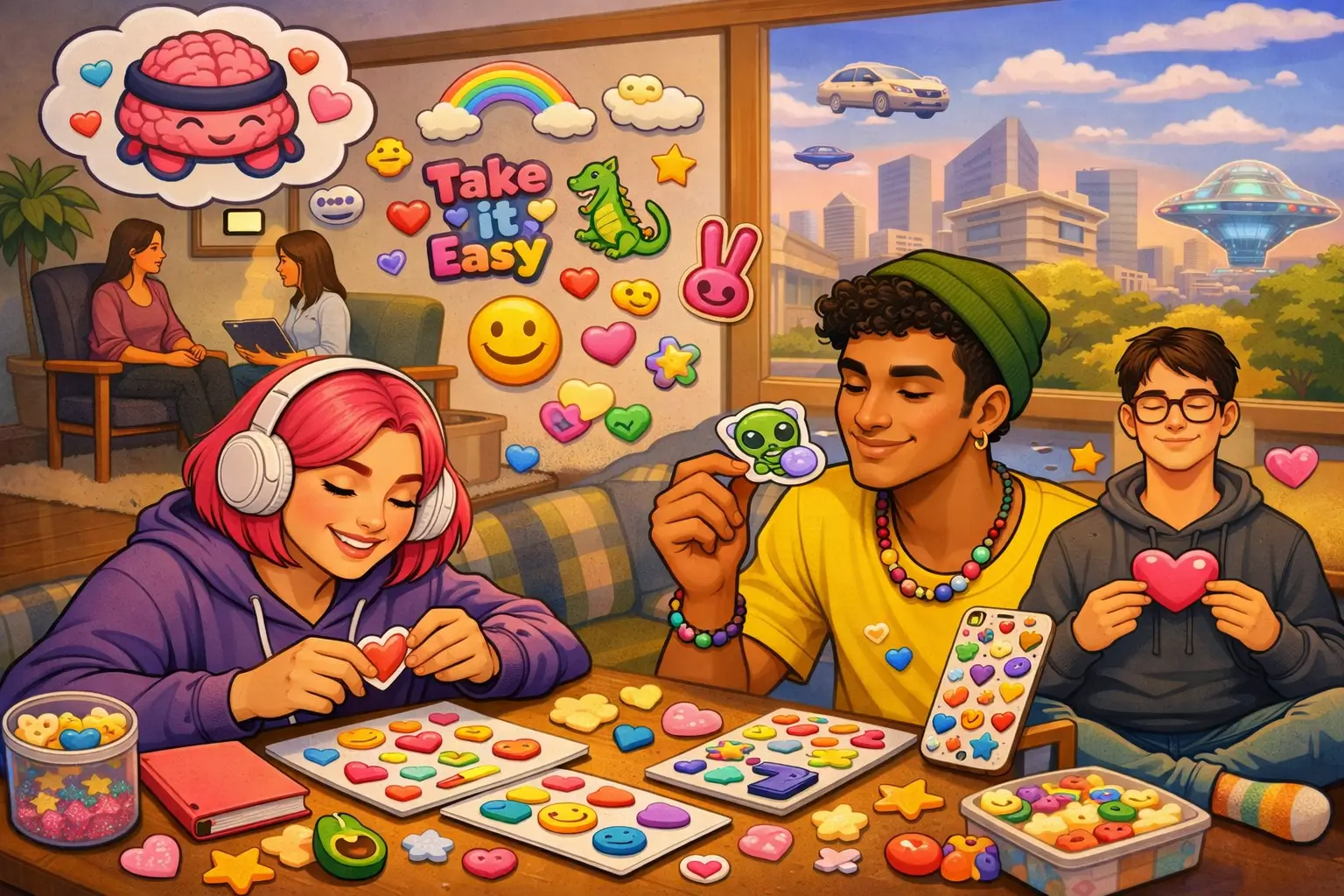
“Featuring custom puffy stickers, custom foil stickers, and the rise of personalized micro-creativity”
There’s something fascinating about the way our generation seeks comfort. Not through grand gestures or complicated routines, but through tiny things — small rituals that live in the corners of our desks, on the covers of our notebooks, or on the backs of our laptops. If you look closely, you’ll find them everywhere: bright shapes, shimmering fragments, soft raised designs. They’re quiet, joyful, and oddly grounding.
They are stickers — but not the kind you remember from childhood.
In 2026, custom puffy stickers and even custom foil stickers became unexpected emotional tools for two generations who grew up in a whirlwind of digital noise, economic anxiety, and relentless performance culture. Stickers have always been cute. What no one predicted is how deeply they would become connected to mental health, identity, and the modern search for gentle joy.
This is the story of how a small creative item became one of the most meaningful micro-therapies of our time.
Customization as a Quiet Form of Self-Rescue
Before anything else, it helps to understand why personalization has become so important. Gen Z and Millennials don’t really want mass-produced identity markers anymore — especially not in a world where everything already feels mass-produced. People want something that feels like theirs, something that reflects them honestly without the need to perform.
That’s where custom stickers enter the picture.
A custom design feels like a private signal. It doesn’t have to earn likes or fit an aesthetic grid. There’s no algorithm watching. It exists only for the person who chose it. When someone puts a custom made sticker on their planner or laptop, it becomes a tiny expression of self — one that doesn’t need an audience or an explanation.
And that is rare today.
Because so much of modern self-expression has become public, curated, and constantly evaluated, these small, tactile choices feel liberating. They let people represent the parts of themselves that don’t need to be posted.
- Identity without performance.
- Creativity without pressure.
- Expression without applause.
It turns out, our generation was desperate for exactly that.
The Touch That Calms a Digital Generation
To understand why these small items feel therapeutic, we have to talk about something deeper — the psychology of touch, texture, and sensory reward.
For most young adults, daily life happens on screens. Glass. Metal. Plastic. Everything smooth, cold, and identical. Our sense of touch has quietly starved for decades.
So when someone peels a soft, raised custom puffy sticker from a sheet, the sensation hits differently. The foam texture, the gentle resistance, the tiny click when it releases — it satisfies a part of the nervous system that digital life simply can’t reach.
This isn’t childish.
It’s neurological.
Soft textures trigger something psychologists call low-intensity sensory reward — the same calming response associated with kneading putty or tapping fingertips across a textured surface. Even dome decals and 3D formats, with their glossy raised finish, bring back an almost forgotten pleasure: interacting physically with something that isn’t a touchscreen.
And then there’s light.
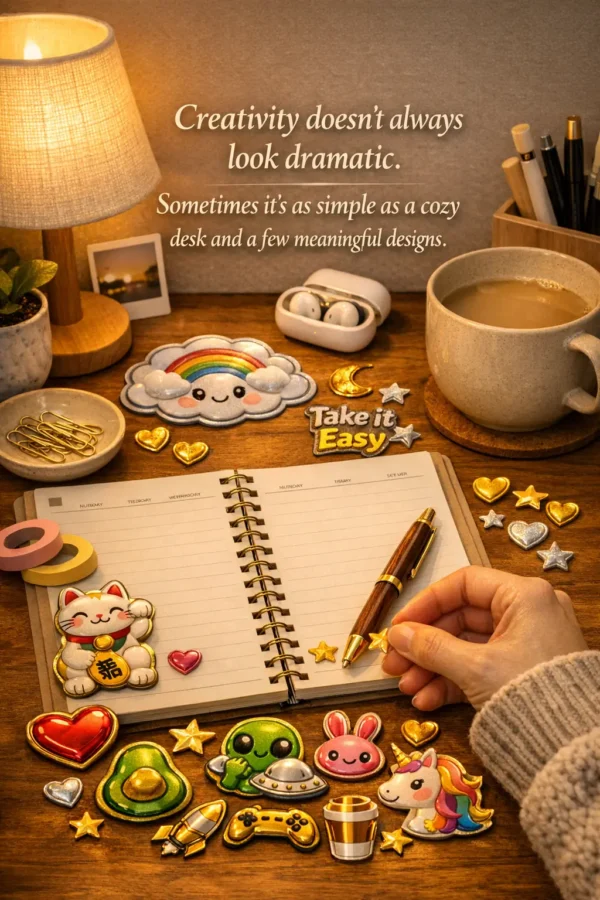
Custom foil stickers, along with their metallic foil variations, introduce another form of sensory satisfaction. The way light shimmers and shifts across a planner page or glossy notebook feels soothing in a way that words don’t quite capture. Sometimes, we need beauty that moves. Beauty that catches sunlight. Beauty that changes when you tilt your head.
It’s a visual exhale — a moment of softness in a day that’s too busy, too bright, too overwhelming.
When Creativity Becomes the Easiest Form of Self-Care
One of the reasons stickers have become so huge is surprisingly simple: they make creativity effortless.
Where most creative hobbies require skill, time, materials, or a bit of bravery, stickers don’t demand anything. There’s no blank-page anxiety. No pressure to be talented. No learning curve. You just peel one, place it somewhere, and suddenly something ordinary becomes personal.
That immediacy makes personalized designs incredibly appealing. They offer the comfort of making something — without the stress of “making art.” They let people play, experiment, decorate, and express themselves freely. For a generation wired with perfectionism, this is a relief.
In a way, stickers have become a gentle entry point into creativity. A place where no one is judging, grading, or comparing. A place where you can start and finish something in seconds, and still feel a spark of joy.
Sometimes, that spark is everything.
Shine, Texture, and the Luxury of Small Things
Not all stickers carry the same emotional weight — and in 2026, two formats lead the aesthetic renaissance.
Puffy Formats: Softness You Can Feel
There’s something universally comforting about softness. Puffy formats evoke the feeling of childhood plush toys and stationery aisles, but with a grown-up twist. They’re nostalgic without being juvenile, soothing without being silly. When used on a notebook or journal, they act almost like little emotional cushions — small reminders that life doesn’t always have to be sharp and serious.
3D labels, cousins of puffy formats, bring this same tactile comfort into the aesthetic world of desk layouts and journaling setups. They’re satisfying to touch and pleasant to look at, and that combination is disarmingly therapeutic.
Foil Formats: Micro-Luxury in Everyday Spaces
Custom foil stickers offer a different kind of pleasure — a tiny luxury. The reflective sheen, the changing colors, the little glimmers across a planner layout: they make everyday objects feel elevated. Metallic foil stickers also help transform simple pages into something elegant, almost ceremonial.
It’s luxury without the price tag. Hope without the pressure. A small, beautiful thing in a day full of responsibilities.
And sometimes, that’s enough to feel lighter.
The Rituals That Quiet the Noise
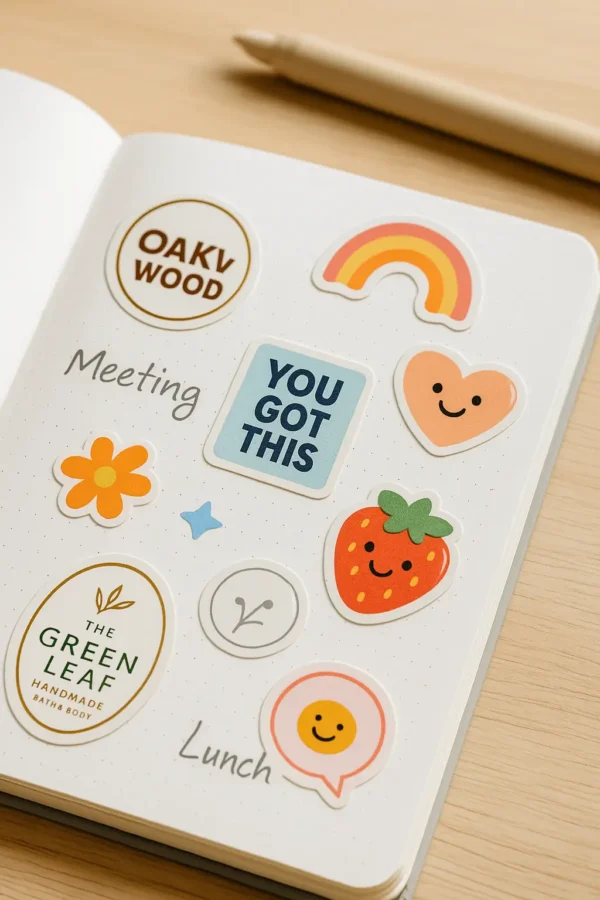
As this trend grows, it’s clear the real therapy isn’t the sticker — it’s the ritual surrounding it. People have built daily practices around these tiny objects:
- Decorating planners to make tasks feel less intimidating
- Journaling moods with thematic designs
- Personalizing laptops and water bottles
- Creating memory pages in scrapbooks
- Building “dopamine desks” with comforting visuals
These rituals are not frivolous. They are grounding practices — physical, tangible interruptions in an otherwise abstract digital life.
They’re moments where time slows down enough for your brain to catch up.
When Brands Discover the Power of Small Gestures
Something interesting has been happening in the business world too: small brands and creators have realized that personalized designs can deliver powerful emotional experiences. They’re using custom foil stickers and other made-to-order formats to upgrade packaging, elevate unboxing rituals, and create a sense of personal connection.
Customers often keep these designs.
They go onto bottles.
Laptops.
Journals.
Mood boards.
They become part of someone’s emotional environment — a reminder of where something came from, who made it, and why it mattered.
People save these labels not because they’re promotional, but because they feel personal.
In an era where advertising feels loud, these small, quiet branding choices feel sincere.
Why Two Generations Needed This So Much
Gen Z and Millennials have lived through relentless change. The pressure to be productive, successful, aesthetically perfect, emotionally stable, financially responsible, socially engaged — it’s exhausting.
Under that weight, big solutions often feel too heavy to reach for.
But small joys?
Those are manageable.
Stickers became the symbol of those small joys — tiny moments where people reclaim control, ease tension, express identity, and create beauty in places that used to feel purely functional.
For some, it’s not about making things pretty.
It’s about making things feel like home.
Conclusion — The Courage Found in Small Joys
It’s easy to overlook something as simple as a sticker, but simplicity is often where healing begins. These tiny pieces of color and texture have become emotional anchors — proof that beauty doesn’t need to be grand to be meaningful, and comfort doesn’t need to be complicated to work.
Custom stickers, puffy texture, shiny pieces of foil — they all carry the same quiet message:
“You’re allowed to make your world softer.”
And maybe that’s why this trend won’t fade.
Because in a time when everything feels loud, overwhelming, and urgent, choosing something small and gentle is one of the bravest things a person can do.
In the end, the stickers aren’t the therapy.
The therapy is the moment you choose joy — even in its smallest form.