Before You See, You Hear
You don’t notice it the first time.
A drawer opens. Something shifts inside.
A hand reaches in, touches something thin but resistant—
—and then that sound.
Sharp. Slightly metallic. Not loud, but impossible to ignore.
You haven’t looked yet, but you already know what it is.
Not because of color. Not because of branding.
Because some materials don’t wait to be seen. They announce themselves.
Mylar is one of them.
Recognition Without Looking
There’s a strange thing about recognition.
We like to believe it’s visual. That we identify things by
how they look—shape, color, detail. That recognition is something the eyes do
first, and the rest of the body follows.
But that’s not always how it works.
Sometimes recognition arrives earlier. Faster. Without
permission.
A sound. A texture. A resistance in your hand.
If you were handed a piece of packaging in complete
darkness, you might not know what it contains. You wouldn’t know the brand, the
design, or even the category.
But if it crinkled in that particular way—tight, dry, almost
reflective—you would recognize it instantly.
Not intellectually. Not by naming it.
Just… knowing.
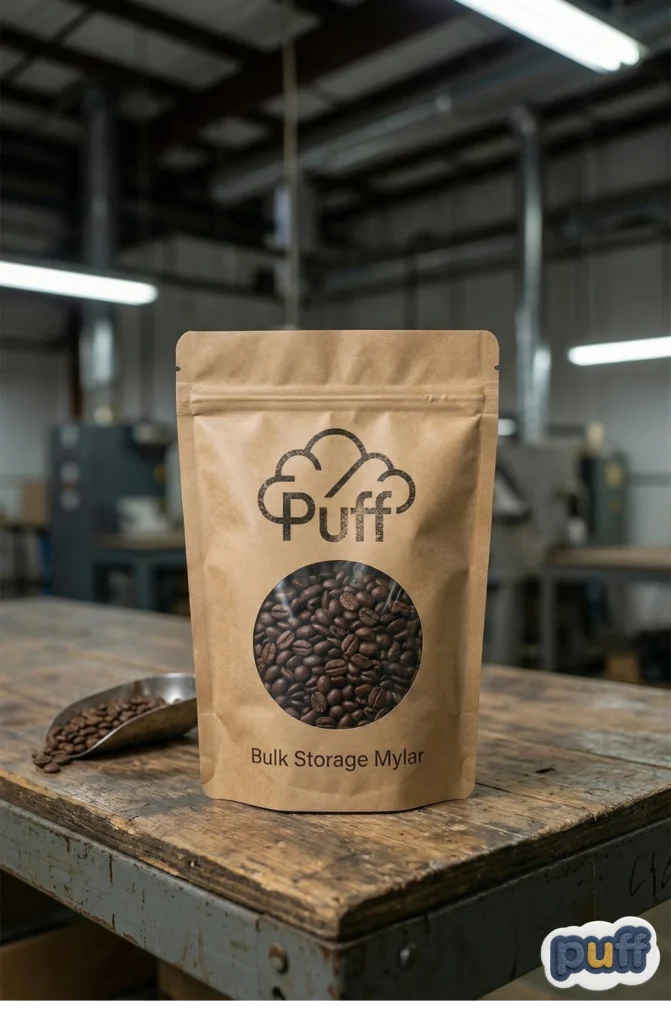
Durable, barrier-protected storage for bulk coffee or industrial ingredients.
Materials That Speak
Every material has a kind of voice, even if we don’t consciously think of it that way.
Paper softens everything. It folds quietly, accepts pressure, and disappears into itself. It doesn’t resist enough to create tension.
Plastic behaves differently. It stretches, gives in, and smooths out interaction. It tries to reduce friction, not create it.
Glass is precise. It taps, clicks, and answers with clarity. Its sound is clean, controlled, almost exact.
Mylar pouch doesn’t belong to any of these categories.
It resists—but not in a heavy or rigid way. It resists just enough to create tension. And that tension turns into sound.
A sharp crinkle. A dry response. A surface that refuses to stay silent.
Even the smallest movement becomes audible.
A slight squeeze. A shift in grip. A change in pressure.
It answers back every time.
The Sound of Resistance
Most materials yield.
That’s what makes them easy to use. Easy to forget.
Paper collapses.
Thin plastic stretches.
Flexible materials absorb movement and keep things quiet.
Mylar bag does
something else.
It doesn’t absorb movement—it translates it.
Every interaction becomes sound because the material holds
tension instead of dissolving it.
You’re not just holding it. You’re interacting with
something that pushes back, even if only slightly.
And that changes perception.
Resistance feels like durability.
Durability feels like protection.
Protection feels like value.
All of this happens before a single word is read, before a
single design element is processed.
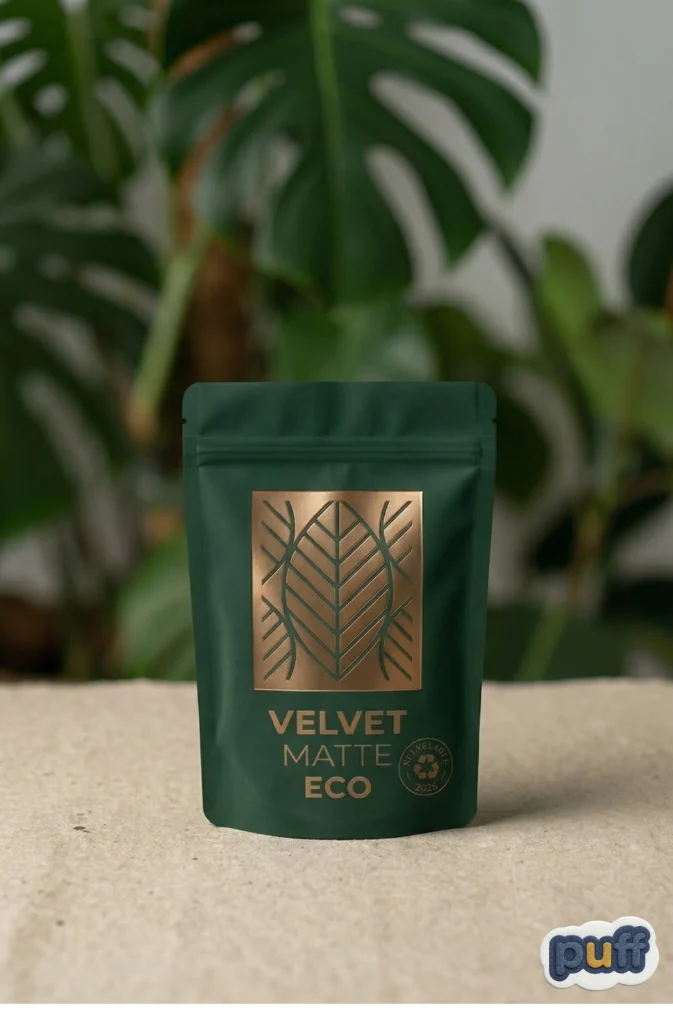
Premium feel, sustainable future. Our signature Velvet Matte Eco series with subtle metallic accents.
The Psychology of Sealed Things
There’s something deeply human about sealed spaces.
An unopened package carries a different kind of weight—not
physical, but psychological.
It suggests containment.
It suggests preservation.
It suggests that something inside has remained untouched.
You see it in small, everyday moments.
The pause before opening something new.
The hesitation before breaking a seal.
The awareness that once opened, something changes permanently.
Closed becomes open.
Protected becomes exposed.
Unknown becomes known.
Soft touch Mylar intensifies
this experience.
Because it doesn’t open quietly.
There’s always resistance. Always a moment where the
material holds its shape before giving way.
And when it does, it marks that transition with sound.
The Sound of Freshness
We often associate freshness with what we see.
Bright colors. Clean surfaces. Sharp edges.
But freshness is also something we hear.
The snap of a lid.
The hiss of pressure releasing.
The crisp tear of something newly opened.
These sounds act as confirmation.
They tell us that what’s inside has been preserved,
separated from the outside world.
Mylar plays into this perception in a subtle but powerful
way.
Even before opening, even before seeing what’s inside, the
sound of handling it suggests that nothing has been disturbed.
That whatever is inside still exists in its original state.
It creates the feeling that time has been slowed—or at least
held back.
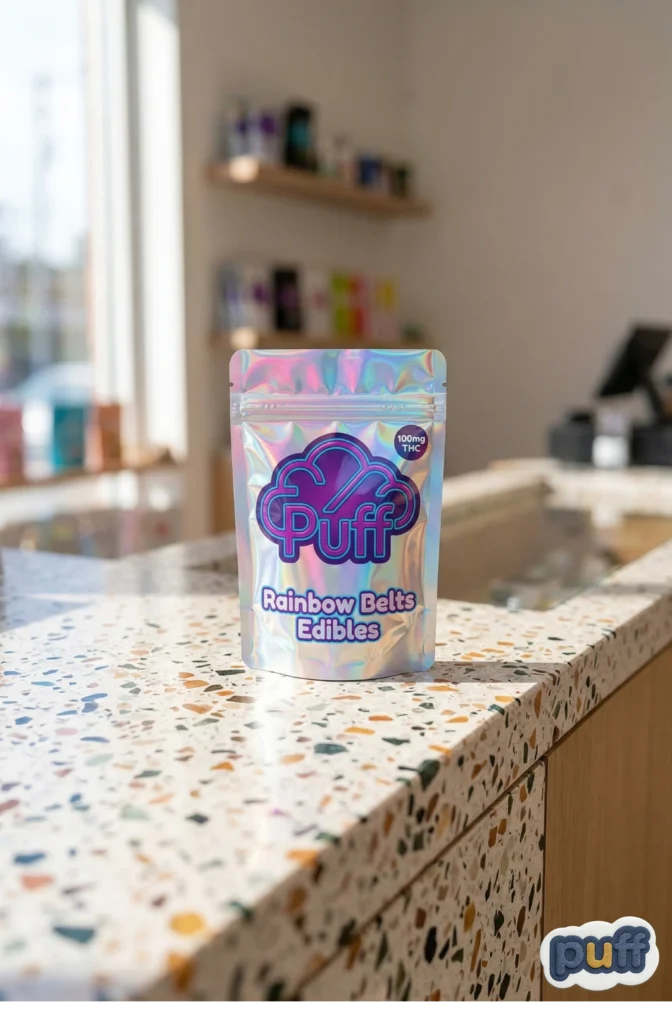
Stand out on the shelf with the vibrant, light-catching shimmer of our holographic Edibles packaging.
A Material That Stays With You
In a world that is becoming increasingly silent, this
matters more than it should.
Most modern interactions are designed to be frictionless.
Screens don’t resist.
Interfaces don’t push back.
Gestures happen without sound, without feedback.
You scroll. You tap. You swipe.
Nothing answers you.
Physical materials behave differently.
They respond. They acknowledge contact. They create
feedback.
Mylar – a
stand up pouch, in particular, feels almost exaggerated in this context.
It reminds you that you’re holding something real.
Something that contains.
Something that separates inside from outside.
And because of that, it stays with you. That same disruption of frictionless, forgettable digital interaction is explored further in The Psychology of Quiet Surfaces.
The Quiet Formation of Memory
Memory doesn’t always form around what we expect.
It’s not always the product itself that stays.
Not always the visual design.
Not always the name.
Sometimes, it’s the interaction.
The way something felt.
The way it responded.
The way it sounded.
The crinkle of custom mylar bag
becomes part of that memory.
Not as a conscious detail—but as something embedded.
Repeated enough times, across different moments and
different contexts, it becomes familiar.
Not tied to one product.
Not tied to one experience.
But tied to the material itself.
What Was Never Designed, Still Defined
What makes this interesting is that none of it was
intentional in the way branding is intentional.
Food grade
mylar wasn’t created to sound this way.
It was created to perform and protect
from air, light, moisture
and time – properties
that come from its structure as a biaxially
oriented polyester film, often referred to as BoPET.
To protect against air.
To block light.
To resist moisture.
To slow down time.
The sound is a byproduct.
A consequence of structure, layering, and tension.
And yet, over time, that byproduct becomes identity.
People don’t think in technical terms when they hear it.
They don’t think about barrier layers or material science.
They hear the sound, and something in them recognizes it.

Certified peace of mind. CR-compliant technology that ensures safety and meets strict regulatory standards
Between Fragile and Strong
There’s a contradiction at the center of smell proof mylar bag.
It feels thin. Almost delicate.
And yet it behaves as something strong, resistant, and
protective.
The sound reflects this tension.
It sounds like it could tear.
But it doesn’t.
It sounds fragile.
But it holds.
That gap between expectation and reality is what makes it
noticeable.
And what makes it memorable.
You Already Know the Sound
If you were handed a piece of packaging in complete darkness—
No branding. No color. No visual cues—
you might not know what it contains.
But if it produced that sharp, unmistakable crinkle—
you would recognize it.
Not because someone taught you.
Not because you studied it.
But because, at some point, without realizing it—
you learned its language.
And it stayed.
Mylar Packaging is often seen. Sometimes felt. Rarely heard.
But once you notice it—you don’t forget it.